.png)
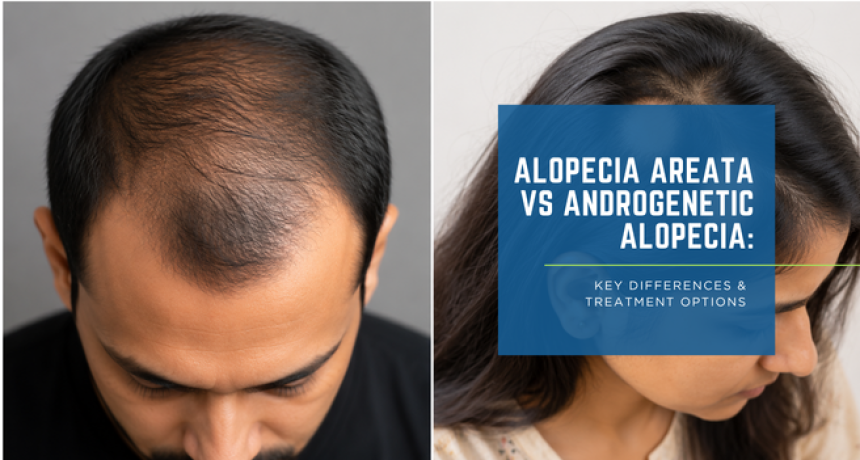
Alopecia Areata vs Androgenetic Alopecia: Key Differences & Treatment Options

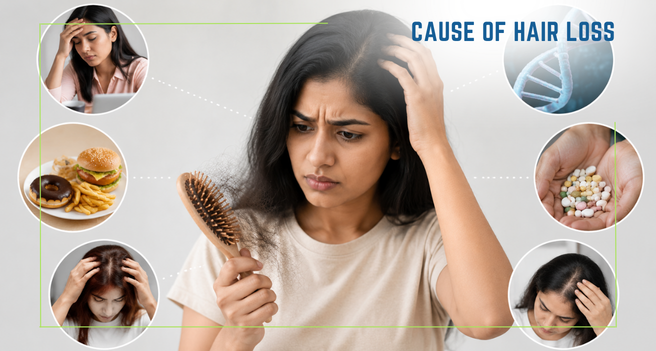
Introduction Hair loss is no longer just a cosmetic concern. Across India, increasing numbers of young adults are experiencing chronic hair thinning, bald patches, widening partitions, and receding hairlines much earlier than previous generations. However, one of the biggest mistakes people make is assuming all hair loss conditions are the same. In reality, different types of alopecia involve completely different biological mechanisms inside the body. Two of the most commonly confused conditions are Alopecia Areata and Androgenetic Alopecia. While both can lead to visible scalp thinning and emotional distress, one is primarily autoimmune while the other is largely hormonal and genetic. This difference changes everything — from the pattern of hair loss to the type of treatment that actually works. Research suggests that androgenetic alopecia remains the most common form of hair loss globally, affecting nearly 30–50% of men by age 50, while alopecia areata affects nearly 2% of the global population during their lifetime. (ScienceDirect) Indian epidemiological data also shows rising rates of female pattern hair loss, telogen effluvium, and autoimmune hair disorders among younger adults, particularly women between 12–39 years of age. (Asian Journal of Dermatology) At L&B Clinics, we approach hair loss through a functional and integrative lens. Instead of suppressing symptoms temporarily with steroid-heavy approaches or relying on repeated injectables, we focus on understanding the internal biological terrain driving follicle dysfunction — including hormones, inflammation, gut health, nutrient deficiencies, metabolic dysfunction, nervous system imbalance, and chronic stress physiology. What Is Alopecia Areata? Alopecia Areata is a chronic autoimmune disorder where the immune system mistakenly attacks healthy hair follicles, leading to sudden, non-scarring hair loss. The condition most commonly presents as smooth circular bald patches on the scalp or beard, though in severe cases it may affect eyebrows, eyelashes, or the entire body. Scientific studies show that alopecia areata develops due to a breakdown in the “immune privilege” of the hair follicle, causing inflammatory immune cells to target actively growing follicles. (PMC) Researchers have also identified strong associations between alopecia areata and autoimmune thyroid disease, inflammatory disorders, gut dysbiosis, chronic stress, and genetic susceptibility. (IJDVL) Unlike scarring alopecia, the follicles usually remain alive in alopecia areata, which means regrowth is biologically possible when immune dysfunction is controlled. However, the condition can be highly unpredictable. Some individuals experience spontaneous regrowth, while others develop repeated cycles of shedding and regrowth over several years. Studies estimate that alopecia areata accounts for approximately 0.7% of dermatology cases in India and remains one of the most common autoimmune causes of hair loss worldwide. (IJDVL) What Is Androgenetic Alopecia? Androgenetic Alopecia is the most common hereditary hair loss condition and is strongly linked to hormonal sensitivity and genetics. It is commonly known as male pattern baldness in men and female pattern hair loss in women. In androgenetic alopecia, hair follicles gradually shrink due to increased sensitivity to DHT (dihydrotestosterone), a hormone derived from testosterone. Over time, thick terminal hairs become progressively thinner, shorter, and weaker until visible thinning and scalp exposure develop. Unlike alopecia areata, androgenetic alopecia progresses slowly over years rather than suddenly. Men usually experience recession near the temples and crown area, while women develop diffuse thinning and widening of the partition without complete bald patches. Research indicates that androgenetic alopecia affects nearly 30% of men by age 30 and more than 50% after age 50. (ScienceDirect) However, metabolic disorders such as insulin resistance, PCOS, obesity, chronic inflammation, and stress appear to be accelerating the condition even in younger adults today. Emerging research also suggests that androgenetic alopecia may not be purely cosmetic. Some studies now associate severe pattern baldness with increased cardiovascular and metabolic risk markers, indicating a deeper systemic connection between hair follicle health and metabolic dysfunction. (NCBI) Alopecia Areata vs Androgenetic Alopecia: Key Differences Although both conditions involve visible hair loss, the underlying biology differs dramatically. Understanding these differences is essential for identifying the correct treatment strategy. In alopecia areata: The immune system attacks healthy follicles and interrupts the normal hair growth cycle. T-cell mediated inflammation develops around the follicle bulb, creating localized hair shedding. Stress, infections, autoimmune disorders, gut inflammation, and immune dysregulation often act as triggers. The condition may fluctuate unpredictably with periods of regrowth and relapse. (PMC) In androgenetic alopecia: Hair follicles become genetically sensitive to DHT hormones over time. Follicles gradually miniaturise and produce thinner, weaker strands. Hormonal imbalance, insulin resistance, and chronic inflammation accelerate progression. Hair loss develops gradually rather than suddenly. (NCBI) Pattern of Hair Loss Typical patterns include: Sudden round or oval bald patches developing within days or weeks. Smooth, non-scarred skin beneath the affected area. Beard patches or eyebrow thinning in some patients. Random unpredictable distribution rather than patterned recession. Common signs include: Receding hairline and crown thinning in men. Widening partition and diffuse thinning in women. Progressive reduction in hair density over time. Miniaturised hair strands becoming visibly thinner. Speed of Hair Loss One of the easiest ways to differentiate these conditions is the speed at which hair loss develops. Patients often notice: Sudden bald patches appearing within days. Clumps of hair shedding unexpectedly. Rapid progression after stress or illness. Simultaneous shedding and regrowth cycles. Most patients experience: Gradual thinning over several years. Slow recession of the hairline or crown density. Progressive weakening of follicles over time. Increasing scalp visibility under light exposure. How To Identify Your Alopecia Type Correct diagnosis is extremely important because treatment strategies differ significantly between autoimmune and hormonal hair loss Signs Suggesting Alopecia Areata You may have Alopecia Areata if: Hair loss appears suddenly in smooth bald patches. Beard or eyebrow hair also begins thinning unexpectedly. You have thyroid disease or autoimmune history. Hair regrows temporarily and falls again later. Emotional stress appears to trigger flare-ups. Signs Suggesting Androgenetic Alopecia You may have Androgenetic Alopecia if: Hair thinning develops gradually over years. There is a strong family history of baldness. The partition widens progressively over time. Hair strands become finer and weaker. The crown or frontal scalp becomes more visible. Why Conventional Treatment Alone Often Falls Short Many conventional approaches rely heavily on: Steroid creams Steroid injections Immunosuppressive drugs Repeated scalp injectables While these approaches may temporarily suppress symptoms, they often do not address the deeper inflammatory, metabolic, hormonal, or immune dysfunction driving follicle damage internally. Research clearly shows that both autoimmune and androgenetic forms of alopecia involve complex interactions between immunity, inflammation, hormones, oxidative stress, and follicle signalling pathways. (PMC) This is why many patients experience relapse once symptom-suppressive therapies are stopped. At L&B Clinics, our philosophy focuses on restoring internal biological balance rather than depending on steroids, repeated scalp injections, or aggressive suppressive approaches. Functional & Integrative Treatment Approach for Alopecia Hair follicles are among the most metabolically active structures in the body. Healthy hair growth depends on proper hormonal signalling, immune regulation, nutrient availability, mitochondrial function, circulation, and nervous system balance. This is why our integrative protocols focus on rebuilding the internal environment supporting follicle recovery. We evaluate: Insulin resistance and metabolic dysfunction accelerating follicle damage. Thyroid imbalance and autoimmune activity linked to immune-triggered hair loss. Vitamin D, ferritin, zinc, B12, and protein deficiencies impairing follicle growth. Gut inflammation and microbiome imbalance affecting immune regulation. Chronic stress physiology and cortisol dysregulation disrupting hair cycles. Anti-Inflammatory Nutrition Therapy Emerging evidence shows that chronic inflammation and oxidative stress significantly affect follicle survival and cycling. Functional nutrition strategies aim to lower inflammatory load while improving metabolic health. Protocols may include: High-protein anti-inflammatory meal planning supporting keratin production. Omega-3 rich foods and antioxidant support reducing oxidative stress. Blood sugar stabilisation to improve insulin sensitivity and hormonal balance. Gut-supportive nutrition improving nutrient absorption and immune function. Gut & Immune Modulation Research increasingly supports a strong gut-skin-hair connection, especially in autoimmune conditions like Alopecia Areata. Gut permeability and microbiome imbalance may contribute to chronic inflammatory signalling affecting follicle immunity. Integrative protocols may focus on: Improving gut microbiome diversity naturally. Reducing inflammatory food triggers. Supporting digestive health and nutrient absorption. Lowering systemic inflammatory burden over time. Stress & Nervous System Regulation Chronic stress is one of the biggest overlooked contributors to modern hair loss. Elevated cortisol affects immune signalling, hormones, sleep quality, circulation, and follicle cycling simultaneously. Research has shown that stress-related immune dysregulation can directly worsen autoimmune hair conditions. (PMC) Integrative recovery strategies may include: Sleep optimisation and circadian rhythm restoration. Breathwork, meditation, and nervous system regulation techniques. Stress resilience practices improving recovery pathways. Lifestyle interventions reducing chronic cortisol overload. Scalp & Regenerative Support Without Injectables Rather than relying on aggressive injectables or repeated steroid procedures, non-invasive scalp support approaches may help improve circulation, follicle nourishment, and scalp environment naturally. These approaches aim to: Improve scalp blood flow and oxygenation. Reduce inflammatory stress around follicles. Support healthier follicle cycling over time. Improve scalp barrier function and hair density support. The Importance of Early Intervention One of the biggest mistakes people make is waiting too long before seeking evaluation. Hair follicles weaken progressively over time, and delayed intervention may reduce the chances of meaningful recovery — especially in chronic androgenetic or inflammatory conditions. Research suggests that early-stage intervention offers significantly better outcomes because follicles are still biologically active during the initial phases of miniaturisation or immune attack. (PMC) If you notice: Sudden bald patches Progressive thinning Widening partition Excessive shedding Eyebrow or beard hair loss it is important to investigate the root cause rather than masking the symptom temporarily. Conclusion Understanding the difference between Alopecia Areata and Androgenetic Alopecia is essential because both conditions involve completely different biological mechanisms. One is primarily autoimmune and inflammatory, while the other is hormonal, genetic, and metabolically influenced. True long-term hair recovery requires more than temporary suppression. It requires understanding the deeper ecosystem influencing follicle health — including immunity, hormones, metabolism, gut health, stress physiology, nutrient status, and inflammation. At L&B Clinics, our functional and integrative approach focuses on supporting the body internally through root-cause assessment, anti-inflammatory nutrition, metabolic optimisation, gut support, stress regulation, and non-invasive regenerative wellness strategies — without dependence on steroids or repeated injectables.Cause of Hair Loss
Alopecia Areata: Autoimmune Dysfunction
Androgenetic Alopecia: Hormonal & Genetic
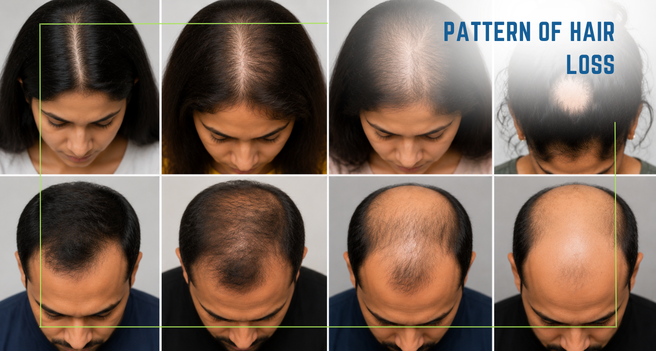
Alopecia Areata
Androgenetic Alopecia
Alopecia Areata Progresses Rapidly
Androgenetic Alopecia Progresses Slowly
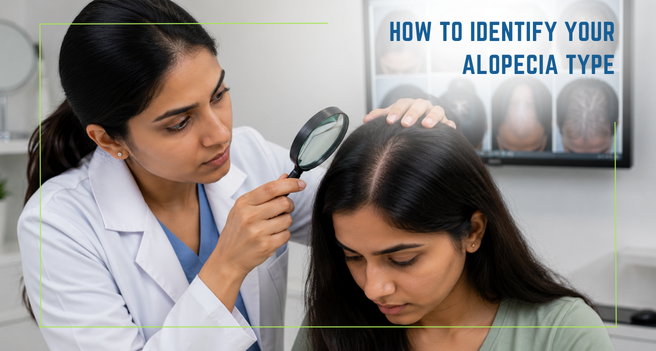
Root Cause Functional Assessment