.png)

- Introduction
- Is Besan Good for Fatty Liver? 9 Key Things to Know
- Who Should Be Careful While Eating Besan?
- When Besan Becomes Harmful for Fatty Liver
- Ways to Include Besan in a Fatty Liver Diet (Do's & Don'ts)
- Common Myths About Besan and Fatty Liver
- LB Clinics: Holistic Approach to Fatty Liver
- Summing Up
- FAQs on Is Besan Good for Fatty Liver
Introduction
When it comes to everyday eating, everyone relies on those familiar ingredients without any second thought. Eating healthy simply means eating those staple foods, which not only uplift your soul but also make your lifestyle healthy. Similarly, besan is also considered a staple ingredient in many households where the day starts with healthy Besan Ka Chilla (savory pancakes). It is seen as a healthy alternative, which makes it an easy choice for regular cooking.
But when it comes to managing health conditions like fatty liver, then people choose their dietary choices wisely. The first question that arises is, Is besan good for fatty liver? In this blog, you will get detailed clarity about is besan good for fatty liver along with its consumption, way of eating and how to use it.
Is Besan Good for Fatty Liver? 9 Key Things to Know
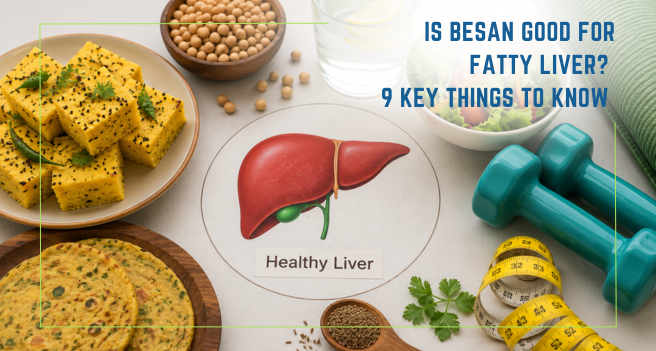
Before adding besan to your diet, it is important to understand how it impacts the fatty liver. While it has several benefits, there are also a few things that one should not overlook.
Besan Is Rich in Plant-Based Protein
Besan is rich in plant-based proteins, which play an important role in supporting liver health. As proteins help in repair as well as regeneration of liver cells when the liver is under stress due to fat accumulation. Therefore, besan offers better nutritional value without empty calories. It also helps in maintaining muscle health, which supports better metabolism. Eating besan in the right amount can make your liver health better when it is combined with a healthy lifestyle.
High Fiber Content Helps Reduce Liver Fat
- Besan contains fiber, which helps in better digestion.
- It also helps in controlling your blood sugar levels.
- Regular intake of besan helps in reducing the fat buildup in the liver over time.
- It keeps you full for longer, which helps in controlling your unnecessary cravings.
- Fiber supports gut health plus helps in sustainable weight management.
Low Glycemic Index Helps Control Blood Sugar
Besan releases sugar slowly into the blood, which helps in avoiding sudden sugar spikes in the blood sugar levels. This is important because high blood sugar can lead to insulin resistance which is the major cause of fatty liver. Compared to maida, besan is the better option, as when blood sugar stays stable, the body stores less fat in the liver. Thus, choosing besan over refined flour can be a smarter option.
Portion Control Is Crucial
Even healthy goods can cause problems even if they are eaten in large quantities. As besan contains carbohydrates that also contributes to your overall calorie intake. Overeating can also lead to excess calorie consumption as well as fat storage. Large portion consumption can slow down the weight loss efforts in fatty liver patients. In short, eating in moderation helps in maintaining proper metabolic balance that improves your health.
Cooking Method Matters a Lot
How you cook besan is very important. Deep-fried foods like pakoras add so much oil and calories to it, which can make fatty liver worse. On the other hand, cooking methods like steaming, roasting or using less oil are much healthier. As the end goal is to reduce unhealthy fats while keeping the food nutritious. Dishes like besan chilla or dhokla are the best choices.
Gluten-Free and Gut-Friendly
- Besan is naturally gluten-free, which makes it suitable for sensitive individuals.
- It is easier to digest as compared to the refined flour options.
- Besan also supports a healthy gut that also plays a role in liver function.
- A balanced gut microbiome can help in reducing the inflammation of the body.
- It can also be combined with digestive enzymes for better tolerance.
Not a Cure for Fatty Liver
Besan is healthy, but it is not a cure for fatty liver. No single food or ingredient can reverse the problem completely. As fatty liver mainly happens due to poor diet, lack of exercise, and other lifestyle factors. Being better than other refined flours, it must be part of your broader lifestyle approach. This means with a healthy diet, regular exercising and consistency, you can improve your fatty liver. Relying only on one food will not give you the desired results.
Helps in Weight Management
- Besan keeps you full for longer, which reduces your cravings to snack frequently.
- It helps in controlling hunger, which makes it easier to manage calorie intake.
- Besan supports healthy eating habits that reduce the risk of fatty liver.
- Made with low oil as well as high-fiber recipes, it gave better results.
- Using besan at proper levels supports your long-term weight control goals.
May Cause Bloating in Some Individuals
- Eating too much besan can sometimes cause the situation of gas or bloating.
- People who have sensitive stomachs feel it is harder to digest.
- Eating raw as well as undercooked besan can increase digestive discomfort.
- Overconsumption can slow your digestion and can cause heaviness.
- Adding ajwain or jeera can reduce bloating & soaking/fermenting can improve digestion.
Who Should Be Careful While Eating Besan?
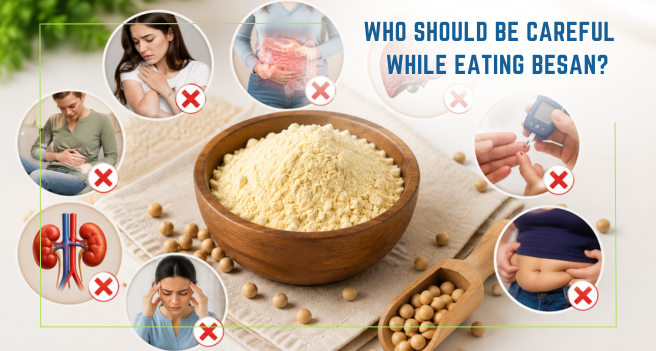
Besan is considered a healthy option, but it does not suit every individual in the same way. As everybody's type is different. Their digestive system, as well as their overall health condition, is also different. It is important to be cautious and pay attention to how your body reacts after consuming something is very crucial. With this, you can make better choices regarding your diet. These people should be more attentive while consuming besan.
- 1.People who have legume allergies should avoid besan, as it can trigger their allergic reactions.
- 2.Individuals with severe IBS can experience discomfort after consuming besan.
- 3.People with advanced liver conditions should consult a doctor first before including it in their diet plans.
- 4.Individuals who follow a very low-carb diet may need to monitor their besan intake.
- 5.Those who are prone to acidity find it difficult to digest besan in large quantities.
- 6.People with slow digestion or metabolism need to consume besan in smaller portions.
- 7.Individuals with specific dietary restrictions should consult a doctor before adding it into their diet.
- 8.People with fluctuating blood sugar levels should check how their bodies respond to besan in different meals.
- 9.Individuals with chronic kidney diseases should consult a doctor before adding besan into their eating routine.
- 10.Those who experience frequent water retention or heaviness after the meals should observe how their bodies respond to besan.
When Besan Becomes Harmful for Fatty Liver
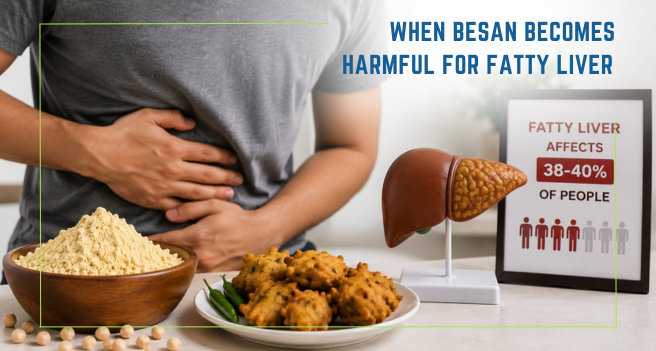
When calorie intake goes beyond the bodily needs, excess energy gets stored as fat in the liver. This means healthy foods like besan can act negatively against the body. Besan is not harmful on its own, but its impact on fatty liver can vary depending on individuals habits as well as overall diet patterns. Eating besan in unhealthy forms or in excess can affect your liver health.
Ways to Include Besan in a Fatty Liver Diet (Do's & Don'ts)
| ✓ Do's — What You Can Have | ✗ Don'ts — What to Avoid |
|---|---|
| Make besan chillas with veggies using less oil. | Avoid deep-fried snacks like pakoras and bhujiyas. |
| Choose steamed dhoklas as a light snack option. | Try to avoid fried namkeen like sev and gathiya as well as mixture. |
| Include besan chapatti with simple home-cooked vegetables. | Replace heavy or oil-rich besan paranthas with healthy besan chapatis. |
| Make light kadhi with low oil as well as buttermilk. | Avoid thick or creamy kadhi with excess oily tadka. |
| Use besan in balanced amounts plus occasionally in dishes like missi roti. | It is better to avoid extra butter to make it tastier rather than bad for health. |
Common Myths About Besan and Fatty Liver
Fact: Even healthy foods add calories — overeating can affect your overall health.
Fact: Homemade fried foods still contain excess oil and can increase liver fat.
Fact: No single food can fix fatty liver — diet and lifestyle matter most.
Fact: One ingredient swap isn't enough — a balanced diet is essential.
Fact: Meal timing matters — heavy meals late at night can affect digestion.
Fact: Balance is key — extra protein doesn't speed up liver recovery.
LB Clinics: Holistic Approach to Fatty Liver
Managing fatty liver is not only about one question, which is "Is besan good for fatty liver?" It requires a broader approach rather than only focusing on eating habits. Real improvement comes from understanding how you eat your meals. At LB Clinics, the focus goes beyond basic diet advice. To improve your fatty liver, we provide personalized treatment that includes individual health condition, digestion, weight and metabolic balance.
We emphasize having a sustainable life with practical lifestyle changes. Our aim is to help you in building long-term habits that can support your liver health naturally with time. With the right balance of nutrition, portion control and lifestyle changes, you can make everything better without relying on a single ingredient.
Summing Up
When it comes to fatty liver, people start cutting down some food items that they think can worsen their situation. But instead of cutting down something or relying on one ingredient, you need a proper balance of everything in your everyday choices. So if you are thinking about, is besan good for fatty liver? This answer totally depends on the way you consume it within the right proportion as well as the right cooking method.
Take control of your liver health with LB Clinics. Get a personalized plan that targets a root cause. Book your consultation today.
FAQs on Is Besan Good for Fatty Liver
Yes, it is better than wheat flour if eaten in the right proportion because it is higher in protein and fiber that has a lower glycemic impact.
The answer to your question is yes, you can eat besan at night, but in small proportions. It is best to keep it light by avoiding heavy, oily dishes.
It is considered a good choice for fatty liver in 2026, as it helps in making you feel full for a longer time plus supports better metabolism. It must be prepared in a healthy way for effective results.
Dosa made from fermented rice and lentil batter is generally a moderate option for fatty liver when eaten plain and grilled rather than fried in excess oil, since fermentation aids digestion and the dish is naturally low in saturated fat. Portion size and cooking oil matter more than the dosa itself. For a complete Indian dietary approach to managing fatty liver, see Indian diet chart for fatty liver.
Besan (gram flour) in moderate amounts is generally fine for fatty liver since it is a protein and fiber-rich legume flour, but deep-fried besan dishes like pakoras are best limited because added oil and refined fat can worsen fatty liver. People with fatty liver who want structured dietary support can explore L&B Clinics' Fatty Liver Care Program for a personalised plan.
Dhokla, a steamed besan-based snack, is considered a better fatty liver-friendly option compared to fried snacks since it uses minimal oil and retains the fiber and protein benefits of gram flour. To understand the broader picture of which Indian foods support liver health, see Indian foods good for fatty liver.