.png)
Continuous Glucose Monitoring for Non-Diabetics: Is It Worth It in 2026?

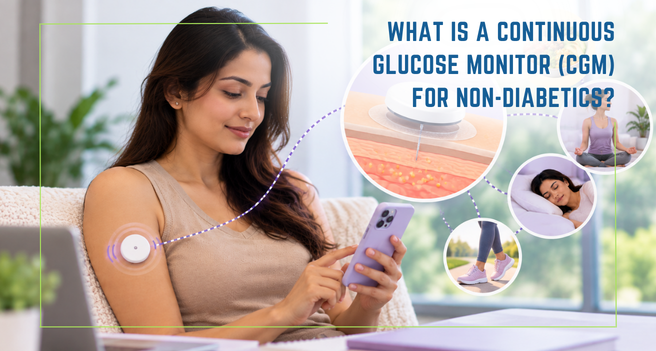
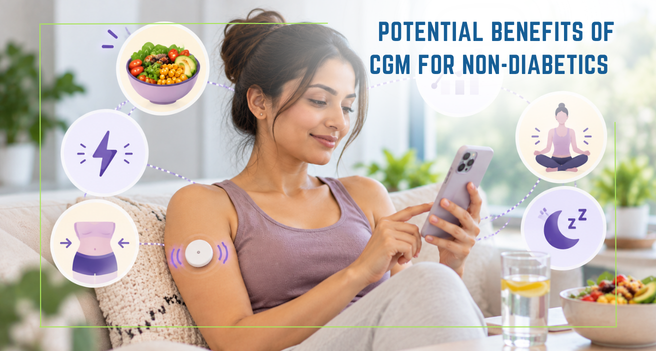
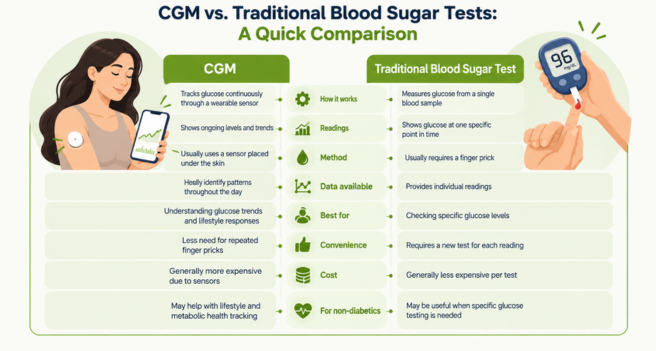
Table of Contents: Introduction What Is a Continuous Glucose Monitor (CGM) for Non-Diabetics? Why Are Healthy People Using a Glucose Monitor Without Diabetes? What Does the Science Actually Say? Potential Benefits of CGM for Non-Diabetics (CGM for Weight Loss, Biohacking Blood Sugar) The Risks Nobody Talks About Myth vs. Fact About Metabolic Health Tracking Who Should Consider a CGM Without Diabetes? How Long Should You Wear a CGM? CGM Price in India: How Much Does a CGM Cost in India in 2026? 7 Mistakes People Make When Using a CGM Without Diabetes Is CGM Worth It in 2026? (A Decision Framework) Why Choose LB Clinics for Metabolic Health? Final Note Frequently Asked Questions You have probably seen those small arm patches on Instagram and wondered what they actually do. They are continuous glucose monitors (CGMs) and they are no longer something that only people with diabetes are talking about. In 2026, continuous glucose monitoring for non-diabetics is gaining attention among people who are curious about CGM for weight loss and metabolic heath tracking. Some are even using CGMs for biohacking blood sugar and testing how their daily habits affect glucose levels. But does wearing a glucose monitor without diabetes really tell you something useful about your health? In this blog, we will break down how continuous glucose monitoring for non-diabetics works, its potential benefits, costs and myths so that you can decide whether it is beneficial for your health or not. A CGM is usually worn on the skin mostly on the back of the upper arm. The sensor measures glucose in the fluid just beneath the skin and sends the readings to an app or receiver. Unlike a traditional glucose meter, which gives you a reading at one specific moment, a CGM shows glucose trends over time. This can make it easier to notice patterns, such as how your body responds to certain meals or physical activity. To understand how different foods affect their glucose levels. For exploring CGM for weight loss and healthier eating habits. Tracking glucose responses to exercise and daily activity. To identify patterns in glucose levels throughout the day. For supporting metabolic health tracking. To experiment with biohacking blood sugar. Becoming more aware of how lifestyle habits affect their body. A study published in Scientific Reports of Metabolic Health Tracking looked at CGM data from 105 non-diabetic and pre-diabetic Indian participants. It found differences in average glucose, glucose variability and time spent in the 70–110 mg/dL range between the groups. The researchers also looked at links between glucose patterns, sleep, activity, stress and inflammation. These findings provide useful data on CGM use in Indians but larger and independent studies are still needed to understand its long-term value for people without diabetes. A CGM can give you a clearer picture of how your everyday habits affect glucose levels. When used thoughtfully, this data supports better food, activity and lifestyle decisions. Supports CGM for Weight Loss: Helps you observe how different meals & activities affect your glucose patterns while working towards healthy weight-management habits. Helps with Biohacking Blood Sugar: Lets you experiment with simple lifestyle changes such as meal choices or post-meal walks and observe your individual glucose response. Makes food responses easier to understand: Shows how your glucose changes after different meals rather than relying only on general nutrition advice. Encourages healthier habits: Seeing your personal patterns may make it easier to connect everyday choices with changes in glucose levels. Supports metabolic health tracking: Adds glucose trends to other health information, such as weight, activity, sleep and routine blood tests. Shows daily glucose patterns: Helps you notice how glucose changes throughout the day, including around meals, exercise and sleep. Myth: A glucose spike always means something is wrong. Fact: Glucose naturally changes throughout the day. A single spike does not automatically indicate a health problem. Myth: A CGM can tell you your complete metabolic health. Fact: CGM provides glucose data but metabolic health also involves factors such as blood pressure, cholesterol, body composition and other health markers. Myth: A flat glucose curve is the goal. Fact: Some glucose variation is normal. The focus should be on understanding meaningful patterns rather than eliminating every fluctuation. Myth: CGM can diagnose diabetes or prediabetes on its own. Fact: CGM can show glucose patterns but diagnostic tests such as A1C and fasting glucose are used to diagnose these conditions. Myth: If a food causes a glucose rise, avoid it. Fact: A glucose response is only one piece of information. Overall nutrition, portion size, activity and individual health goals also make a huge difference. Myth: More metabolic health tracking means better health. Fact: Tracking is useful when the data helps you see the changes in your body. Those who want to understand how different foods affect their glucose levels. People interested in CGM for weight loss as part of a healthy lifestyle. Those who want to explore metabolic health tracking not bodyweight alone. People who are curious about how exercise, sleep and meal timing affect glucose patterns. Those interested in biohacking blood sugar through small personalized lifestyle experiments. People who enjoy using health data to understand their daily habits and patterns. For non-diabetics, there is no one fixed duration that works for everyone. A short period can help you understand patterns within your daily routines as well as tasks while longer use provides more data over time. The right duration depends on your goals, the CGM device and whether a healthcare professional recommends ongoing monitoring. The CGM price in India varies depending on the brand, sensor type and how long it can be worn. In 2026, a continuous glucose monitor (CGM) sensor costs between ₹3,100 and ₹12,000 per sensor in India. Some sensors are designed for shorter wear periods whereas others can last longer. When comparing options, consider sensor duration, replacement costs and any additional app or consultation fees. Using a CGM without diabetes can be useful for understanding personal glucose patterns, but it is easy to overinterpret the data. Avoiding these common mistakes can help you use the information more thoughtfully. Treating every glucose spike as a sign of a health problem. Focusing on single readings instead of looking at overall patterns. Avoiding healthy foods just because they cause a temporary glucose rise. Using CGM data to self-diagnose diabetes or prediabetes. Comparing your glucose readings too closely with someone else’s. Becoming overly focused on keeping glucose levels perfectly flat. Ignoring other important health factors such as sleep, exercise, nutrition and routine blood tests. Whether a CGM is worth the cost in 2026 depends on what you want to learn from it. If you enjoy tracking health data and want to see your personal glucose responses to meals or routines, a CGM is beneficial. If you do not have a clear goal for using one, the cost and extra data may not add much value. L&B Clinics takes a personalised approach towards your health by combining medical supervision, nutrition, physical activity, stress reduction and sleep optimization. Our diabetes care program also includes continuous glucose monitoring for real-time insights and customized meal plans based on your metabolic profile. Here are some of the reasons for choosing us for your betterment. Personalized care: Treatment plans are tailored to individual needs as well as goals and circumstances. Continuous glucose monitoring: We offer continuous glucose monitoring as part of our advanced diabetes care approach. Customized nutrition: Meal plans are developed according to your metabolic profile and individual needs. Lifestyle-focused approach: The diabetes program includes nutrition, physical activity, stress reduction and sleep optimization. Multidisciplinary care: The clinic describes a team that includes medical doctors, nutritionists, physical therapists, counsellors and other specialists. Advanced testing and tools: We provide continuous glucose monitoring with functional lab testing among our approaches. Continuous glucose monitoring offers a closer look at how your body responds to food, exercise, sleep and daily habits. For people without diabetes, it can be useful for finding personal patterns while supporting metabolic health tracking. However, a CGM is not a diagnostic tool. So, not every glucose change needs to be treated as a problem. Curious about what your glucose patterns could tell you about your health? Talk to the experts at L&B Clinics to explore whether CGM-based metabolic health tracking could fit your needs. There is no single best CGM for everyone; the right choice depends on various factors such as sensor duration, features, accuracy, comfort and cost. No, CGM provides glucose trends whereas HbA1c is an established blood test that is used to assess average blood glucose over time. It is advised to discuss CGM use with a doctor if you have health concerns or want to interpret your glucose readings.What Is a Continuous Glucose Monitor (CGM) for Non-Diabetics?
Why Are Healthy People Using a Glucose Monitor Without Diabetes?
What Does Science Actually Say?
Potential Benefits of CGM for Non-Diabetics
The Risks Nobody Talks About
Myth vs. Fact About Metabolic Health Tracking
Who Should Consider a CGM Without Diabetes?
How Long Should You Wear a CGM?
CGM Price in India: How Much Does a CGM Cost in India in 2026?
7 Mistakes People Make When Using a CGM Without Diabetes
Is CGM Worth It in 2026? (A Decision Framework)
Why Choose LB Clinics for Metabolic Health?
Final Note
Frequently Asked Questions
Q. What is the best continuous glucose monitor for non-diabetics in 2026?
Q. Can CGM replace HbA1c?
Q. Should I consult a doctor before using a CGM?