.png)
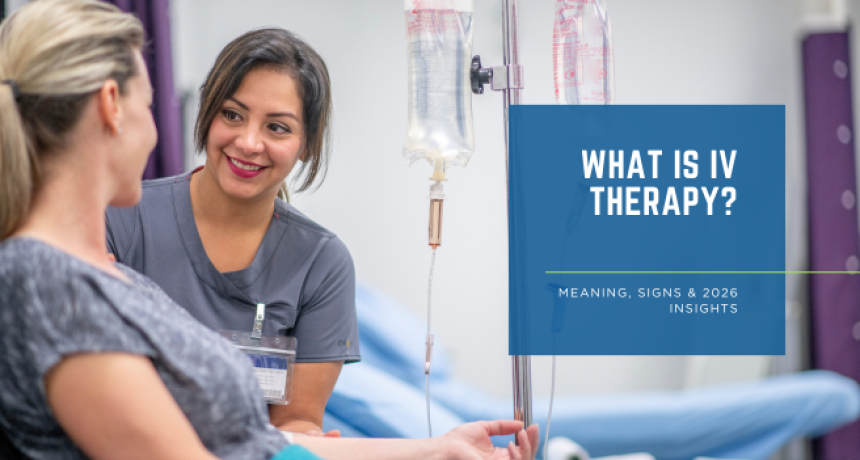
What Is IV therapy? Meaning, Signs & 2026 Insights

IV therapy is becoming more and more popular for people who want to feel healthier and more energetic and recover faster. But many people still wonder, what is IV therapy, and why do doctors recommend it? IV therapy is now used both in hospitals and wellness clinics. In this blog, we will explain everything in a clear and simple way so you can decide if it is right for you or not. IV therapy, also known as intravenous therapy, is a medical treatment in which fluids, vitamins, minerals, or medications are delivered directly into a person’s bloodstream through a vein, allowing the body to absorb them quickly and effectively. This is the reason doctors recommend it for quick hydration and boosting energy. In earlier times IV therapy was used in hospitals for emergencies, surgeries, and serious illnesses, but today it is used for wellness and preventive care. In modern times it plays a crucial role in managing lifestyle-related health issues like fatigue, immunity, and nutrient deficiencies. As for what is IV therapy research, this method is used in modern medicine to help the body absorb nutrients much better than oral supplements. It helps doctors to give precise doses to the patients as per their needs. Understanding about how IV therapy works can help you feel more confident and comfortable about the treatment. This process is simple and safe for your health, and here are the step-by-step process, equipment used, and types of medications used. A sterile IV cannula or catheter for vein access. IV drip set or infusion pump to control the flow of fluids. Sterile IV bags containing the prescribed solution. Medical gloves, antiseptic wipes, and monitoring equipment for safety. Antiseptic swabs for skin cleaning & transparent dressing and tape for covering. Containers for safe disposal of needles and catheters used during the process. Constant or chronic fatigue Frequent headaches Dizziness Dry skin Dry and stick mouth Sunken eyes Lower energy all the time Hair fall Weak immunity Body weakness Muscle cramps Poor concentration Brain fog Dark Urine Vomiting Nausea Slow recovery Post-viral weakness Lingering tiredness Slow healing Burnouts due to stress Fainting and confusion Falling sick frequently Rapid heartbeat Fast breathing Pale hands and feet High work stress Long working hours Travel fatigue Irregular routines Poor diets One of the biggest benefits of the IV therapy is that it provides immediate hydration and delivers nutrients directly into the bloodstream, which means the body can start using them right away. It offers better absorption and also ensures that minerals and vitamins are used effectively by the body. It is useful in many senses for those people who face gut issues, poor digestion, chronic fatigue, or poor absorption of nutrients from food or tablets. IV therapy is beneficial for wellness and medical purposes, including boosting immunity, improving energy levels, supporting metabolism, enhancing skin and hair health, and helping the body recover faster after illness or surgery. If you’re looking for reliable medical guidance on IV therapy in Delhi, the team at LB Clinics can help you understand your options in a safe and professional way. IV therapy is generally safe when it is done under proper medical supervision and in a clean, clinical environment. Understanding the possible risks and safety measures can help you make a more informed and confident decision. 1. If the IV is not administered in a clean and sterile medical environment, then it can increase the risk of infection. 2. Repeated sessions can cause inflammation of the veins that causes irritability, pain, redness, or swelling. 3. Some people face allergic reactions due to certain vitamins, minerals, or medications in the drip. 4. Incorrect fluid or nutrient levels can cause discomfort or health issues if not properly assessed by a doctor. Mild pain or discomfort at the injection site Minor bruising or swelling Temporary dizziness or light-headedness Slight fatigue after the session in some cases Feeling cold or mild chills for a short time. Minor bleeding in the area when the cannula is removed. Metallic or strange taste in mouth during the infusion. Redness in the injected site for a few hours. The IV therapy market is rising significantly as people are more concerned about their health and wellness. As per some data, the market is going to rise up to USD 20.3 billion, growing at a CAGR of around 7.2% by 2026. About what is IV therapy in India, data shows that growing awareness of nutrient deficiencies, lifestyle-related fatigue, and post-illness recovery is accelerating the adoption of IV therapy beyond traditional hospital settings. 1. Personalized IV Formulations: IV drips will be increasingly customized based on age, lifestyle, and health goals rather than using one-size-fits-all formulas. 2. Preventive and Longevity Medicine: More people will use IV therapy not just for illness, but for prevention, immunity, and healthy aging. 3. Corporate Wellness Programs: Companies can include IV therapy as a part of employee wellness or stress-management programs. 4. Medical Wellness Integration: IV therapy will be offered not only in hospitals but also in medically supervised wellness clinics. With these emerging trends and advancements, IV therapy is expected to become a routine part of preventive, recovery, and performance-focused healthcare programs. IV therapy has become an important part of modern healthcare. As we understand what is IV therapy, its benefits, signs, risks, and emerging trends, it helps you make more informed health decisions. IV therapy is a medical treatment that starts from improving hydration and energy levels to supporting recovery and overall wellness. Looking ahead to 2026, IV therapy is expected to become even more personalized, research-driven, and closely linked with diagnostic testing and preventive care. You can expect advancements in formulations and personalized treatments tailored to individual health needs and preferences. IV therapy can deliver antioxidants and vitamins that may support skin health and overall wellness. IV therapy is used for hydration, delivering medications, and providing essential nutrients directly into the bloodstream.What Is IV Therapy?
Why Is IV Therapy Important in Modern Medicine?
How IV Therapy Works
The IV Therapy Step-by-Step Process:
Signs You May Need IV Therapy
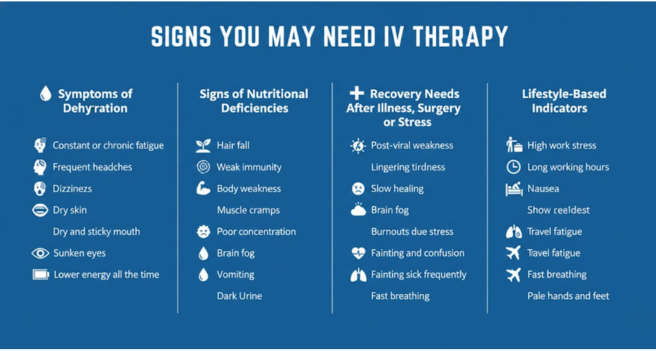
Symptoms of Dehydration
Signs of Nutritional Deficiencies
Recovery Needs After Illness, Surgery, or Stress
Lifestyle-Based Indicators
Benefits of IV Therapy
Is IV Therapy Safe?
Medical Risks to Be Aware Of
Possible Side Effects
Future Insights on IV Therapy (2026 Guidance)
Emerging Trends in IV Therapy
What to Expect from IV Therapy in 2026
Final Recap
FAQs on What Is IV Therapy? Meaning, Signs & 2026 Insights
1. What should I expect from IV therapy in 2026?
2. Can IV therapy help with anti-aging?
3. What is IV therapy used for?