.png)
Oligo Scan Test: Definition, Meaning & Clinical Notes

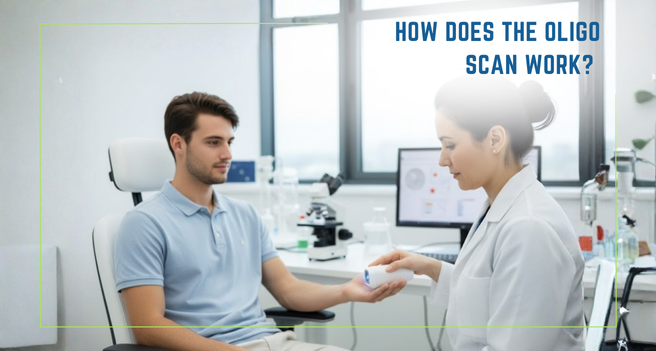
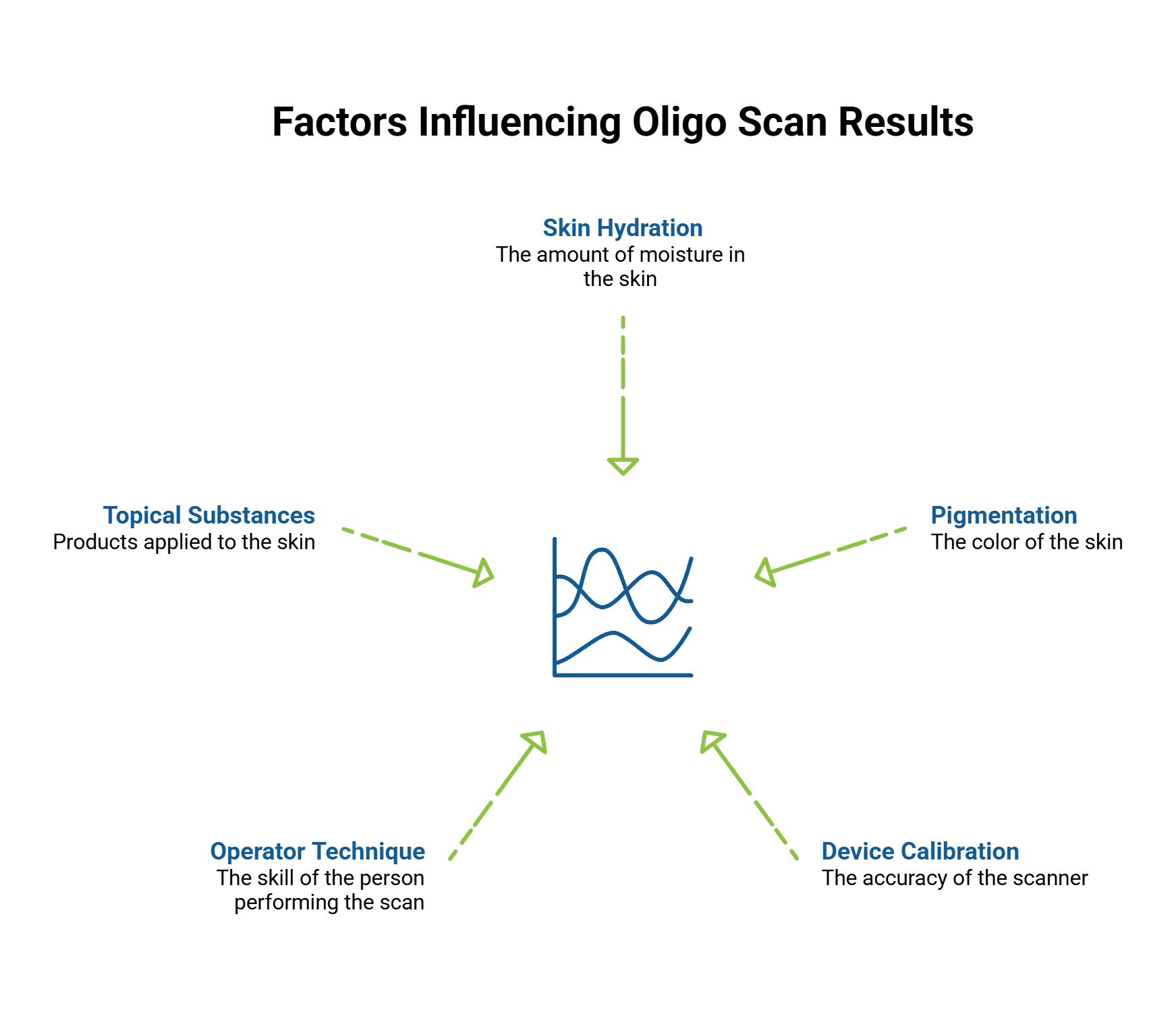
The Oligo Scan test is a non-invasive, spectrophotometric screening tool designed to estimate tissue-level mineral status and potential heavy metal accumulation. Its primary clinical value lies in identifying functional imbalances—states where cellular demand, absorption, or storage of micronutrients is compromised, even when conventional blood tests appear normal. From a physiological standpoint, many essential minerals—such as magnesium, zinc, selenium, and copper—are predominantly intracellular. Serum concentrations are tightly regulated by homeostatic mechanisms and may remain within reference ranges until tissue depletion becomes advanced. Oligo Scan attempts to provide insight into this earlier phase of imbalance. At Longevity & Beyond Clinics, Oligo Scan is used strictly as a supportive clinical assessment, complementing biochemical testing, clinical history, and lifestyle evaluation. It is not positioned as a diagnostic test, but as an early-indicator tool within preventive and integrative medicine. Oligo Scan operates on the principle of spectrophotometry, a validated analytical method widely used in chemistry and biomedical research. During the test, a handheld optical probe emits specific wavelengths of light onto selected areas of the palm. Minerals and metals present in superficial tissues interact with light in element-specific ways, altering absorption and reflection patterns. These optical signatures are analysed using calibrated algorithms to generate relative estimations of tissue mineral and metal status. Essential minerals & trace elements: magnesium, zinc, calcium, iron, selenium, potassium, copper Potentially toxic metals: mercury, lead, aluminium, cadmium, arsenic Clinically, these values should be interpreted as relative trends, not absolute concentrations. Their significance emerges only when correlated with symptoms, dietary intake, gut absorption, renal handling, and environmental exposure. Scientific literature consistently demonstrates that serum mineral levels do not reliably reflect intracellular sufficiency, particularly in chronic stress, inflammation, insulin resistance, or gastrointestinal dysfunction. Oligo Scan may help clinicians identify patients who are functionally deficient despite normal laboratory values, prompting deeper evaluation rather than empirical supplementation. Urban populations are increasingly exposed to low-dose heavy metals via air pollution, water sources, food contamination, and occupational factors. While Oligo Scan does not confirm toxicity, elevated tissue trends may justify confirmatory testing and environmental risk assessment. When integrated responsibly, Oligo Scan supports precision nutrition, avoidance of unnecessary supplementation, and improved patient adherence through visual, data-backed education. Rapid, real-time insights facilitating immediate counselling Non-invasive and repeatable, suitable for monitoring trends Multi-element overview, offering a systems-level perspective Its greatest value is not diagnostic certainty, but clinical conversation—helping bridge the gap between symptoms and conventional test results. A scientifically responsible discussion of Oligo Scan must acknowledge its constraints. Readings may be influenced by skin hydration, pigmentation, topical exposure, device calibration, and operator technique. For this reason, Oligo Scan should never be used in isolation. Oligo Scan does not diagnose deficiency or toxicity. Medical decisions—especially supplementation, chelation, or treatment—must be based on clinical evaluation and validated laboratory investigations. Professional interpretation is non-negotiable. Ongoing research in micronutrient physiology, oxidative stress, and environmental health continues to reinforce the importance of early functional assessment. The future of Oligo Scan lies in: Improved standardisation and calibration Longitudinal trend analysis rather than single-point readings Integration with biochemistry, gut health, and metabolic markers As guidelines evolve, ethical clinical application and practitioner training will determine its long-term credibility. The Oligo Scan test represents a functional screening approach, not a diagnostic endpoint. Scientifically, its relevance lies in highlighting early cellular imbalances that may precede disease—provided results are interpreted within a robust clinical framework. Used responsibly, Oligo Scan can enhance preventive care, reduce blind supplementation, and improve patient understanding. Used without context, it risks oversimplification. The distinction lies in clinical judgment, not technology. FAQs on Oligo Scan Test: Definition, Meaning & Clinical Notes It is used to assess relative trends in tissue mineral status and possible heavy metal exposure to support preventive health evaluation. The underlying principle of spectrophotometry is well-established; however, clinical interpretation requires caution and correlation with validated tests. No. It complements but does not replace biochemical diagnostics. Yes. It is non-invasive and does not involve radiation or blood sampling. At L&B Clinics, diagnostics are never treated as standalone numbers. Every test is selected and interpreted through an evidence-aligned, clinically responsible framework, ensuring that insights are grounded in human physiology and current medical understanding. Rather than over-relying on reports, the focus remains on clinical interpretation—connecting diagnostic data with symptoms, lifestyle, medical history, and validated investigations. This approach prevents overdiagnosis, unnecessary supplementation, and confusion. Guided by a preventive, education-led healthcare philosophy, L&B Clinics empowers individuals to understand their health at a deeper level, make informed decisions, and adopt sustainable strategies that support long-term wellness, not short-term fixes. Evidence-aligned, clinically responsible use of diagnostics Strong emphasis on interpretation, not just testing Preventive, education-led healthcare philosophyWhat Is the Oligo Scan Test?
How Does the Oligo Scan Work?
Elements Assessed
Applications: Where Oligo Scan Has Meaning
1. Functional Mineral Deficiency Assessment
2. Environmental & Heavy Metal Exposure Screening
3. Personalised Preventive Health Planning
Benefits of Oligo Scan
Limitations & Scientific Considerations
Accuracy & Variability
Not a Diagnostic Tool
Future Outlook: Clinical Use Beyond 2026
Conclusion
1. What is the Oligo Scan test used for?
2. Is Oligo Scan scientifically valid?
3. Can it replace blood tests?
4. Is it safe?
Why L&B Clinics