.png)
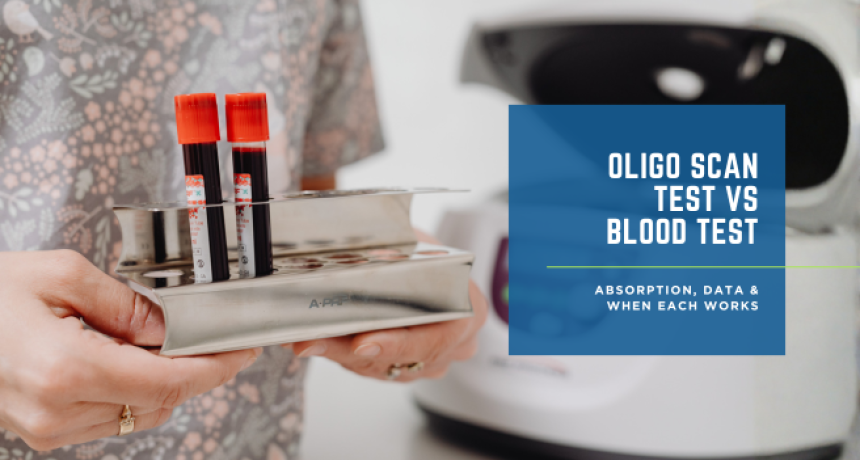
Oligo Scan Test vs Blood Test: Absorption, Data & When Each Works

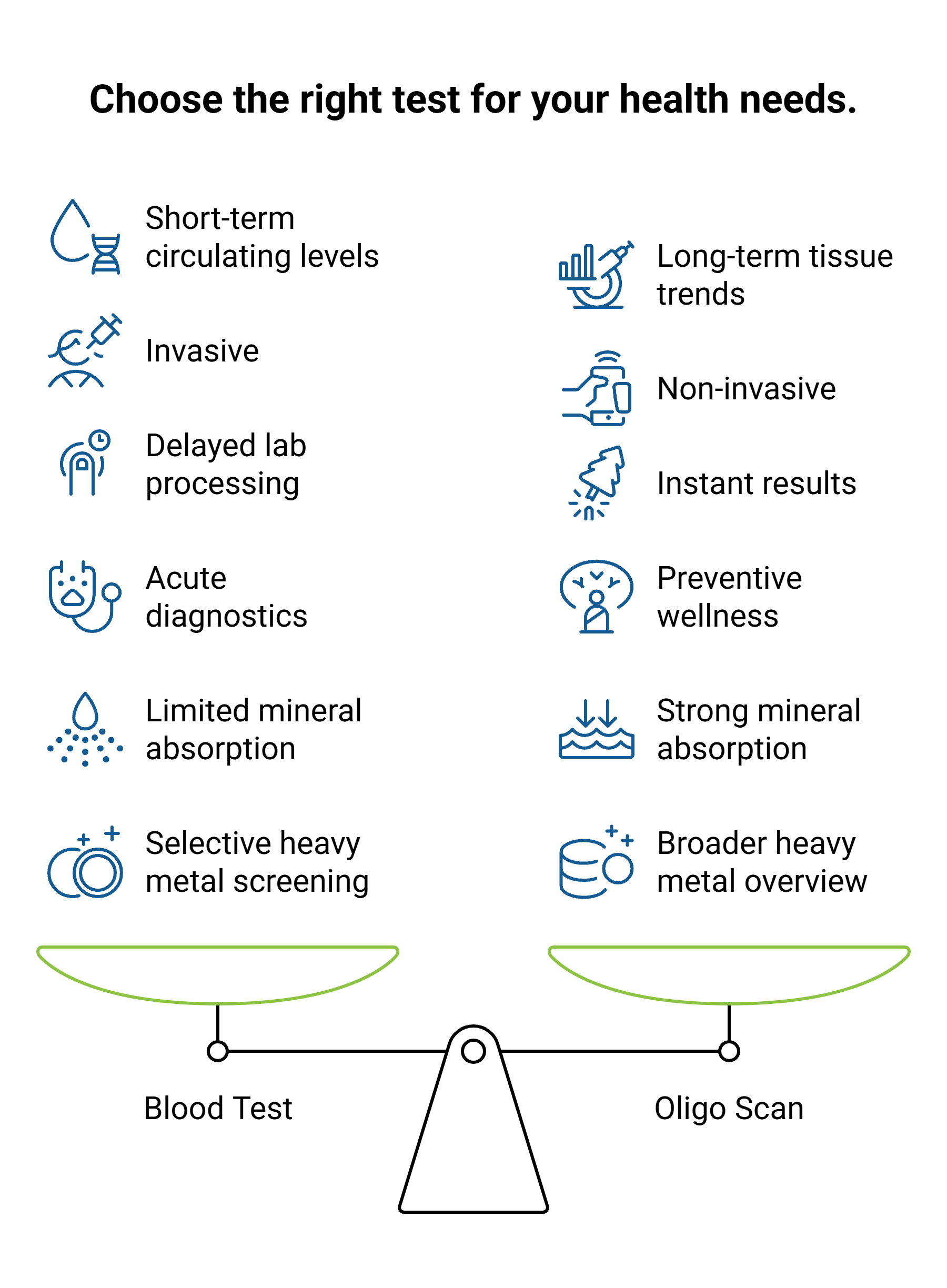
Many people assume that blood tests tell the complete story about their health. Yet, a large number continue to experience fatigue, hair fall, hormonal imbalance, slow metabolism, or poor recovery—even when their reports are marked “normal.” This gap exists because what circulates in blood is not the same as what your cells actually absorb and store. This is where the comparison between Oligo Scan testing and blood tests becomes critical. While blood tests remain essential in medical diagnostics, they primarily reflect short-term or compensatory changes. Oligo Scan, on the other hand, focuses on tissue-level mineral absorption and toxic load, offering a deeper preventive insight. At Longevity & Beyond Clinics, both tests are used strategically—not as competitors, but as complementary tools. Understanding when each works best can help you make smarter decisions about your health, nutrition, and long-term wellness. A blood test measures what is currently circulating in your bloodstream. This includes nutrients, hormones, enzymes, inflammatory markers, and metabolic indicators at a specific point in time. When it comes to minerals such as iron, calcium, magnesium, or zinc, blood levels are tightly regulated by the body. If levels drop, your system often pulls minerals from tissues or bones to keep blood values stable. As a result, blood reports may appear normal even when cellular stores are depleted. Blood Tests are excellent for: Diagnosing acute deficiencies or excesses Monitoring disease markers Detecting infections, anemia, or organ dysfunction Evaluating hormone and metabolic disorders However, they are less reliable for identifying chronic micronutrient depletion, absorption issues, or toxic accumulation at the tissue level. The Oligo Scan test uses advanced spectrophotometry to assess minerals, trace elements, and heavy metals stored in body tissues, not just what is floating in the blood. A handheld scanner is placed on specific points of the palm. Safe light wavelengths interact with tissue minerals, and the reflected signal is analyzed against validated reference values. The result is a real-time report showing deficiencies, excesses, and toxic burdens. Oligo Scan provides insight into: Long-term mineral absorption Cellular availability of nutrients Hidden deficiencies despite normal blood tests Accumulated heavy metals such as mercury, lead, aluminium, cadmium, and arsenic This makes it especially valuable in preventive, integrative, and longevity-focused healthcare, where the goal is early correction rather than late diagnosis. The most important distinction between Oligo Scan and blood testing lies in absorption versus circulation. Blood tests answer the question: Oligo Scan answers a different and often more relevant question: For example, a person may take magnesium supplements regularly and show normal blood levels. Yet, chronic stress, gut inflammation, or insulin resistance may prevent proper cellular uptake. Oligo Scan can reveal this hidden deficiency long before symptoms worsen. This difference explains why many people feel unwell despite “perfect” lab reports. Blood tests are dynamic and reactive. Levels can change daily based on food intake, hydration, stress, or recent supplementation. This makes them ideal for acute care and disease monitoring. Oligo Scan provides stable, trend-based data, reflecting long-term nutritional patterns and toxic exposure. It is less influenced by what you ate yesterday and more reflective of how your body has been functioning over months. For preventive health, longevity planning, and chronic symptom evaluation, this depth of data is often more actionable. Blood testing remains irreplaceable in many situations. It is the gold standard for: Diagnosing anemia, infections, and inflammatory diseases Monitoring thyroid, liver, kidney, and metabolic health Assessing hormone levels and acute deficiencies Emergency and hospital-based care At L&B Clinics, blood tests are always used when medical diagnosis, disease confirmation, or pharmacological decisions are required. Oligo Scan excels in situations where symptoms persist without clear explanations. It is particularly useful for: Chronic fatigue and low energy Hair fall, skin issues, and poor recovery Hormonal imbalance and metabolic resistance Stress, anxiety, and sleep disturbances Detoxification and heavy metal exposure assessment Anti-aging and longevity protocols It is also highly effective for personalized nutrition planning, helping clinicians decide not just what to supplement, but whether supplementation is actually being absorbed. At Longevity & Beyond Clinics, Oligo Scan and blood tests are not used in isolation. They are integrated to create a complete health picture. Blood tests identify medical risks and disease markers, while Oligo Scan reveals nutritional gaps and toxic burdens that influence long-term health outcomes. This combined approach allows for smarter interventions, fewer unnecessary supplements, and more sustainable wellness strategies. The choice between an Oligo Scan test and a blood test is not about which is “better,” but when each is most appropriate. Blood tests are essential for diagnosis and medical care. Oligo Scan fills the critical gap by showing how well your body is absorbing, storing, and utilizing nutrients at the cellular level. If you want to move beyond symptom management and understand the deeper reasons behind persistent health issues, combining both tests under professional guidance offers the most complete and future-ready approach to wellness. Preventive Health Services Nutritional Guidance Wellness & Longevity Programs Editor’s Note: Oligo Scan results should always be interpreted by trained healthcare professionals and used alongside standard medical investigations where required.Introduction: Why This Comparison Matters
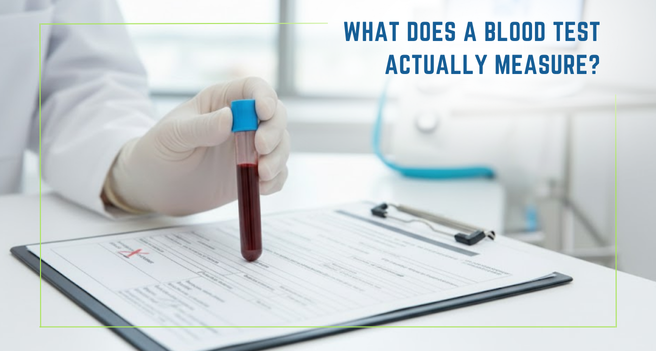
What Does a Blood Test Actually Measure?
What Does the Oligo Scan Test Measure?
Absorption vs Circulation: The Core Difference
What is available in the bloodstream right now?
What has actually been absorbed and stored by the cells over time?Data Depth: Short-Term vs Long-Term Insight
When a Blood Test Works Best
When Oligo Scan Works Best
Ologo Scan vs Blood Test: A Practical Comparison
Why L&B Clinics Uses Both
Conclusion
Explore at L&B Clinics