.png)

How to Spot Early Signs of Gut Microbiome Problems

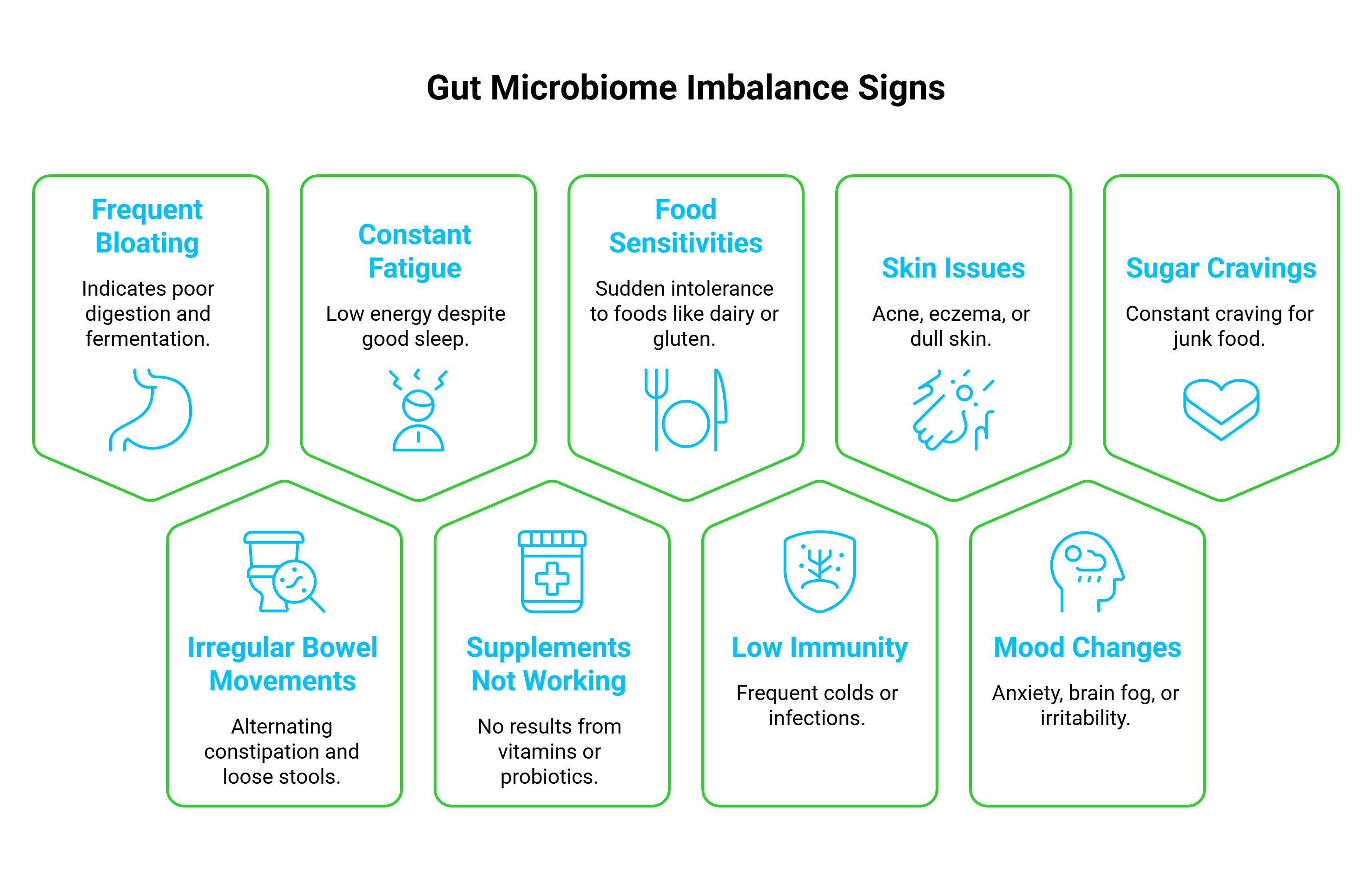
Most gut-related problems don’t start with severe pain or a medical diagnosis. They begin quietly—with small, repeatable signals that are easy to ignore. By the time tests are done, the imbalance is often years old. Learning to spot early gut microbiome warning signs helps you intervene before digestion, immunity, and energy levels deteriorate further. Occasional bloating is normal. Daily or post-meal bloating, especially after foods like fruits, salads, or dals, often signals poor fermentation balance, low digestive enzymes, or bacterial overgrowth. This is one of the earliest indicators that gut bacteria are not processing food efficiently. You don’t need diarrhoea or constipation to have gut issues. Early signs include: Alternating constipation and loose stools Feeling “incomplete” after bowel movements Needing coffee or food to trigger stools These point to altered gut motility and microbiome imbalance. If you’re sleeping enough but still feel drained, your gut may not be absorbing nutrients properly. Low energy is often linked to poor absorption of iron, magnesium, B vitamins, and amino acids—functions heavily dependent on gut microbes. This is a major red flag. If you’ve taken probiotics, vitamins, or minerals for months with little or no improvement, the issue is often not deficiency—but absorption and gut inflammation. Supplements cannot work if the gut environment is compromised. Sudden intolerance to dairy, gluten, onions, or previously well-tolerated foods often indicates changes in gut bacteria or increased gut permeability. These sensitivities are signals, not allergies—and ignoring them worsens imbalance. Nearly 70% of immune activity is linked to the gut. Early microbiome imbalance may show up as frequent colds, slow recovery, recurrent throat or sinus issues, or prolonged inflammation after illness. Acne flare-ups, eczema, itching, or dull skin—especially when topical treatments fail—often reflect gut-driven inflammation. Skin is one of the earliest organs to reflect microbiome stress. The gut and brain communicate constantly. Early gut imbalance may appear as: Increased anxiety or irritability Difficulty concentrating Low stress tolerance These symptoms are often mislabelled as “mental,” when the root cause is biochemical and gut-driven. Certain gut bacteria thrive on sugar and refined carbs. Persistent cravings—despite willpower—can indicate microbial imbalance influencing appetite signals. If 3 or more of these signs persist for weeks or months, it suggests your gut microbiome may be struggling. This is the stage where a gut microbiome test is most useful—not after years of damage. Testing early helps answer: Is digestion efficient? Is absorption compromised? Is inflammation present? Why aren’t supplements working? Waiting for severe symptoms often leads to: Repeated antibiotics Long-term supplement dependency IBS labels without root-cause correction Early gut assessment allows diet, lifestyle, and microbial balance to be corrected gently, before chronic disease patterns set in. At L&B Clinics, we don’t treat gut microbiome testing as a stand-alone lab report — we treat it as a clinical insight tool that informs personalised health action. Our GUT 360 gut microbiome assessment is designed specifically for real-world digestive and metabolic needs, especially in urban Indian lifestyles like Delhi’s. Here’s what sets GUT 360 at L&B Clinics apart: GUT 360 goes beyond listing bacteria — it evaluates gut diversity, digestion quality, short-chain fatty acid production, inflammatory signals, and microbial balance. This provides insight into absorption capacity and gut-related dysfunction, not just composition. Many microbiome tests return data without context. At L&B Clinics, trained clinicians interpret results alongside symptoms, diet history, lifestyle stressors, and medical data. This prevents misinterpretation and misuse of supplements. Your results translate into a targeted plan — including diet adjustments, lifestyle strategies, evidence-based supplements (only if needed), and gut-repair protocols tailored to your unique profile. GUT 360 is integrated into a preventive, education-focused care model rather than a one-off sale. We prioritise long-term gut resilience and systemic wellbeing. Pollution, stress, antibiotic exposure, erratic eating, and heavy workloads — especially in cities like Delhi — influence the gut. GUT 360 is contextualised to factors common to urban Indian populations. GUT 360 is a comprehensive stool-based gut microbiome analysis that assesses microbial diversity, fermentation markers, inflammation, and functional capacity — not just bacterial presence. At L&B Clinics, results are clinically interpreted, not just reported, giving you actionable strategies rather than raw data. Yes. GUT 360 uses a stool sample, which is painless, safe, and simple. There is no blood draw or invasive procedure involved, making it suitable for adults of all ages. Typically, results are available within a few days, after which you’ll have a detailed interpretation session with our clinician to understand what the findings mean for your health. Yes, but only if clinically indicated. Unlike generic plans, recommendations from GUT 360 are personalised based on your microbiome profile, symptoms, and goals — making them more effective than one-size-fits-all advice. There may be simple pre-test instructions (e.g., avoiding antibiotics or probiotics for a short period) to ensure accuracy. Your clinician at L&B Clinics will provide precise guidelines before sample collection. Gut microbiome patterns can help predict absorption efficiency and responsiveness, especially for nutrients like B vitamins, magnesium, and others. While it won’t guarantee response, it gives far more insight than testing without gut context. Frequency depends on your health goals and response to changes. Many patients retest after 3–6 months of targeted intervention to reassess progress. GUT 360 is particularly useful for those with persistent digestive issues, poor supplement response, recurrent deficiencies, inflammation, or systemic symptoms like fatigue or skin issues. Your clinician will advise whether it’s appropriate based on your health history. If you’re struggling with bloating, irregular digestion, fatigue, poor supplement results, or systemic issues without clear answers — GUT 360 at L&B Clinics can provide the clarity you need.Early Signs of Gut Microbiome Imbalance

1. Frequent Bloating (Even With “Healthy” Foods)
2. Irregular Bowel Movements
3. Fatigue That Doesn’t Match Your Lifestyle
4. Poor Response to Supplements
5. Increased Food Sensitivities
6. Frequent Infections or Low Immunity
7. Skin Changes Without Clear Cause
8. Mood Changes, Anxiety, or Brain Fog
9. Cravings for Sugar or Processed Foods
When These Signs Mean It’s Time to Test

Why Early Detection Matters
Why Choose GUT 360 at L&B Clinics
✅ Comprehensive Functional Assessment
✅ Clinical Interpretation — Not Just a Report
✅ Personalised Action Plans
✅ Holistic Prevention, Not Quick Fixes
✅ Urban Realities Accounted For
FAQs About GUT 360 at L&B Clinics
1. What makes GUT 360 different from other microbiome tests?
2. Is GUT 360 safe and non-invasive?
3. How long does it take to get results?
4. Will I be given a diet or supplement plan?
5. Do I need to prepare for the test?
6. Can the test tell me if I’ll respond to certain supplements?
7. How often should I repeat the test?
8. Is this suitable for everyone?
Don’t let symptoms go unexplained.