.png)

Gut Microbiome Test vs Blood Tests: Absorption, Data & When Each Works (2026 Guide)

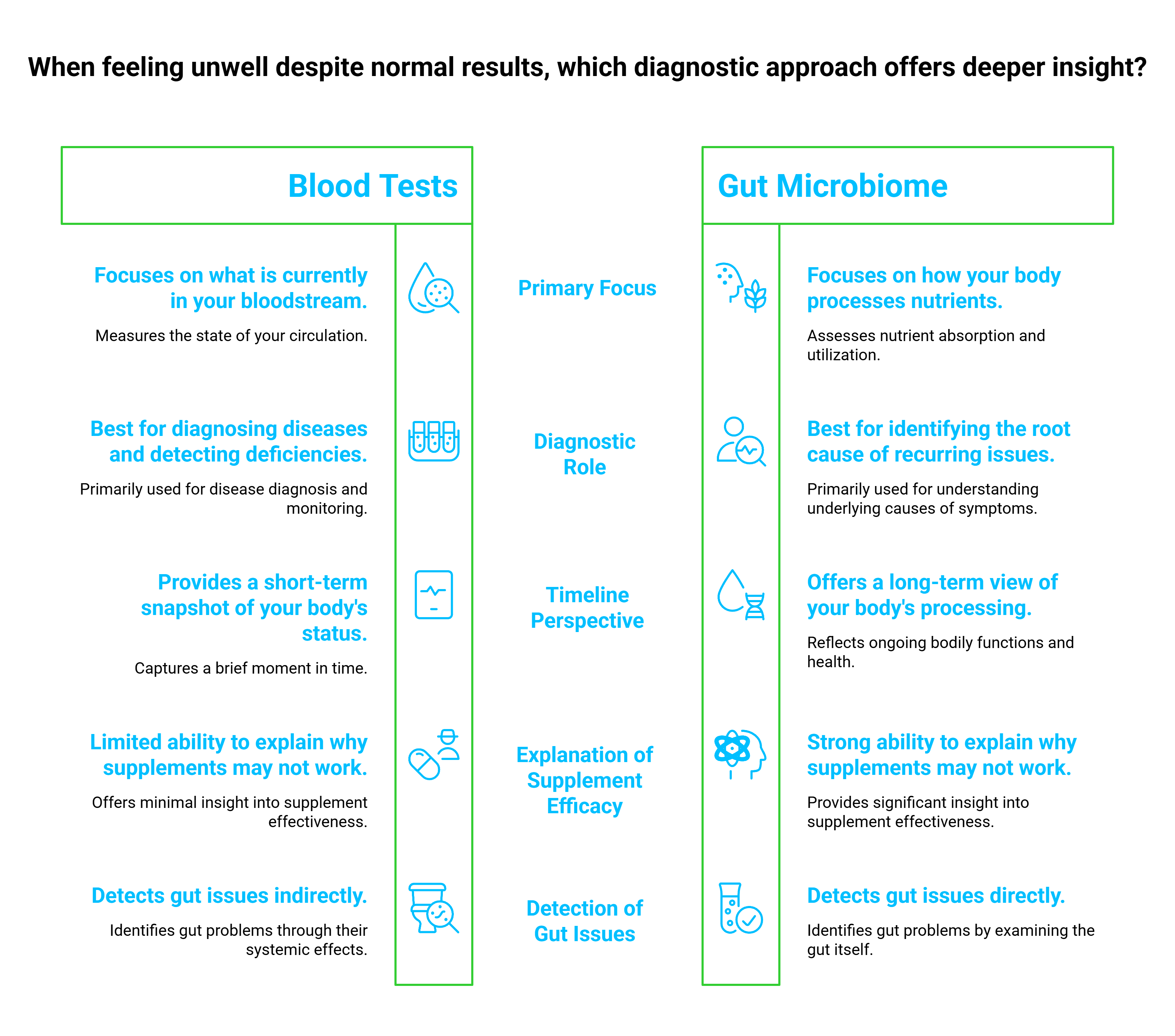
In modern healthcare, one of the most common frustrations patients face is this: blood reports look normal, but symptoms persist. Fatigue, bloating, recurrent infections, skin issues, mood changes, and poor response to supplements often continue despite “normal ranges.” This gap exists because blood tests and gut microbiome tests answer very different clinical questions. Blood tests show what is circulating right now. Gut microbiome tests explain how well the body can digest, absorb, and utilise nutrients over time. As preventive medicine evolves in 2026, clinicians increasingly recognise that absorption capacity matters as much as intake. At Longevity & Beyond Clinics, both tests are used strategically—not as alternatives, but as complementary tools. Understanding when each works best helps avoid unnecessary testing, blind supplementation, and delayed recovery. Absorption is not a passive process. Nutrients must survive stomach acid, be broken down by enzymes, pass through the intestinal lining, and be transported into cells. Blood tests capture end results, not the process. The gut microbiome governs much of this process by: Producing digestive enzymes Regulating gut lining integrity Synthesising vitamins (B vitamins, vitamin K) Modulating inflammation that affects nutrient uptake If gut health is compromised, blood values may fluctuate—or appear normal due to short-term compensation—while cellular nutrition remains inadequate. Blood tests remain a cornerstone of medical diagnostics and are irreplaceable in many scenarios. Blood tests measure: Serum vitamin and mineral levels Hormones, enzymes, inflammatory markers Organ function (liver, kidney, thyroid) Acute deficiencies or excesses They answer the question: Blood tests are essential for: Diagnosing anaemia, infections, endocrine disorders Detecting severe deficiencies or toxicities Monitoring disease progression and medication response Emergency and hospital-based care In short, blood tests are excellent for diagnosis and monitoring pathology. Blood tests have inherent physiological limitations when it comes to absorption. The body tightly regulates blood levels. When intake drops or absorption declines, minerals are often pulled from tissues and bones to keep blood values stable. This means: Early magnesium, zinc, and iron depletion may not show Chronic stress can drain cellular stores without altering serum levels Supplement intake can temporarily inflate blood values Blood tests provide a moment-in-time snapshot. They do not reflect long-term digestive efficiency, microbial health, or inflammatory interference with absorption. A gut microbiome test analyses stool samples to assess microbial composition, functional activity, and gut environment. At L&B Clinics, the gut test used is GUT 360, a comprehensive analysis designed to evaluate digestion, absorption, inflammation, and microbial balance together. Gut tests provide data on: Microbial diversity and balance Beneficial vs inflammatory bacteria Short-chain fatty acid production (butyrate, acetate) Markers of gut inflammation and permeability Presence of pathogens or overgrowths They answer the question: Research consistently shows that gut bacteria influence absorption of: Magnesium, calcium, and iron B vitamins (B6, B9, B12) Vitamin K and biotin Amino acids and fatty acids Low microbial diversity or reduced butyrate-producing bacteria is associated with: Poor mineral absorption Increased gut inflammation Higher nutrient loss Reduced response to oral supplements Clinically, this explains why patients often say: “I’ve taken supplements for years, but nothing changed.” This is the core difference. Blood tests show what reached the bloodstream. Blood tests should be prioritised when: A medical diagnosis is required Symptoms are acute or severe Anaemia, thyroid disease, diabetes, or infection is suspected Medication dosing or safety must be monitored They are non-negotiable in conventional medical care. Gut testing is especially valuable when: Blood reports are normal but symptoms persist Recurrent deficiencies keep returning Supplements cause bloating or no improvement IBS, constipation, diarrhoea, or reflux is present Autoimmune, metabolic, or inflammatory issues exist In these cases, treating numbers without addressing the gut leads to cycle-based healthcare rather than resolution. Urban Indian populations show rising prevalence of: Antibiotic-induced dysbiosis Functional gut disorders Stress-related digestive dysfunction Micronutrient deficiencies despite adequate diets ICMR-linked nutrition data and global microbiome research increasingly emphasise that dietary intake does not equal nutritional status. Absorption efficiency—shaped by the gut microbiome—is now recognised as a critical variable. By 2026, personalised nutrition models increasingly recommend gut testing before long-term supplementation. The most effective strategy is not choosing one over the other, but sequencing them correctly. Best-practice clinical flow: Blood tests to rule out disease and severe deficiency Gut microbiome test (GUT 360) to assess absorption capacity Gut correction if needed Targeted supplementation only when absorption is optimised This approach reduces unnecessary supplements, lowers long-term costs, and improves outcomes. Blood tests and gut microbiome tests are not competitors—they are answers to different questions. Blood tests diagnose and monitor disease. Gut microbiome tests explain absorption, utilisation, and long-term nutritional efficiency. If you are symptomatic despite “normal” blood reports, the issue is often not what you are eating—but what your gut can process. A comprehensive gut microbiome test like GUT 360 helps uncover this missing layer, enabling personalised, effective, and preventive healthcare in 2026 and beyond. No. They serve different purposes and work best together. No. Blood tests remain essential for diagnosis and medical monitoring. Because absorption depends on gut health, not just intake. Anyone with persistent symptoms, poor supplement response, or digestive issues. Comprehensive gut testing with GUT 360 Evidence-aligned interpretation by trained clinicians Integration of gut data with blood markersWhy This Comparison Matters in 2026
Understanding Absorption: The Missing Link
Blood Tests: What They Do Well
What Blood Tests Measure
“What is available in circulation at this moment?”Strengths of Blood Testing
Limitations of Blood Tests in Absorption Assessment
Homeostasis Masks Deficiency
Snapshot, Not a Trend
Gut Microbiome Tests: What They Reveal
What Gut Microbiome Tests Measure

“Can the body absorb and utilise nutrients effectively?”Absorption Insights from Gut Microbiome Testing
Data Depth: Process vs Outcome
Gut tests explain why it did or did not get there.When Blood Tests Work Best
When Gut Microbiome Tests Work Best
India Context & 2026 Trends
The Smart Approach: Blood Tests + Gut Microbiome Data
Conclusion
FAQs on Gut Microbiome Test vs Blood Tests
1. Are gut microbiome tests better than blood tests?
2. Can gut tests replace blood tests?
3. Why do supplements fail even when blood levels look normal?
4. Who should consider a gut microbiome test?
Why L&B Clinics
Preventive, root-cause-focused healthcare