.png)
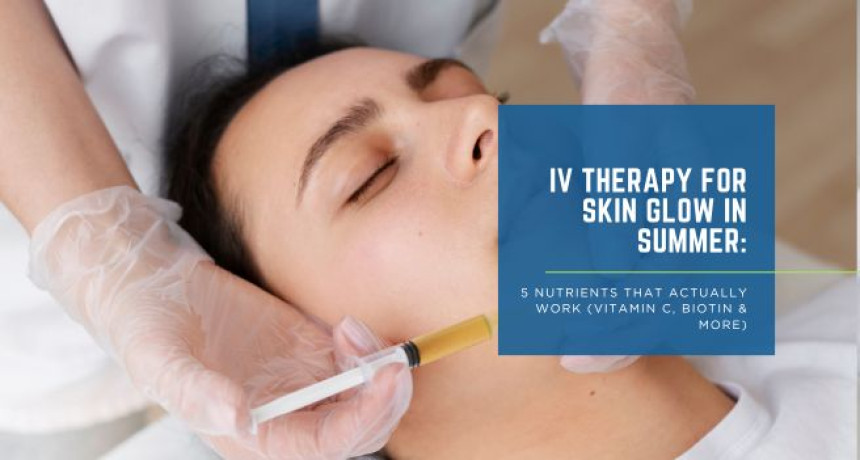
IV Therapy for Skin Glow in Summer: 5 Nutrients That Actually Work (Vitamin C, Biotin & More)

Every summer in India, skin takes a beating. The combination of relentless UV radiation, extreme heat, sweat-driven mineral loss, dehydration, and environmental pollution creates a perfect storm of oxidative damage that manifests visibly — dullness, uneven skin tone, hyperpigmentation, breakouts, premature fine lines, and a general loss of the luminosity that healthy, well-nourished skin naturally carries. Most people respond with topical products. Serums, moisturisers, SPF — all useful, all necessary, but all fundamentally limited. Topical skincare works at the surface. The biological processes that determine whether your skin is genuinely glowing — collagen synthesis, melanin regulation, cellular repair, antioxidant defence — happen deep within the dermis and at the cellular level, driven by nutrients that must arrive through the bloodstream. This is precisely where IV therapy changes the conversation about skin health. At L&B Clinics, our IV skin formulations are not cosmetic gimmicks. They are clinically grounded, nutrient-specific infusions that address the root biochemistry of skin health — delivering exactly what your skin needs, at concentrations that oral supplementation and topical application simply cannot achieve. Here are the five nutrients that actually work — what they do, why the IV route matters, and what the science says. The Real Reason Indian Summer Destroys Skin Health Before addressing solutions, it is worth understanding the problem clearly. India's summer UV index regularly exceeds 11 — classified as extreme — across most of the country between March and June (WHO Global Solar UV Index, 2002). At this intensity, UV radiation generates free radicals in the skin at a rate that overwhelms the body's natural antioxidant defences. Free radicals are unstable molecules that damage DNA, degrade collagen fibres, and oxidise lipids in the skin cell membrane — producing the visible signs of photoageing: pigmentation, loss of firmness, and dullness. Simultaneously, heat and sweating drain the body of the very minerals and vitamins that constitute the skin's internal repair and defence system. Vitamin C — essential for collagen production — is rapidly consumed as an antioxidant under UV stress. Zinc, critical for skin cell turnover and wound healing, is lost through sweat. Biotin, which maintains the structural integrity of the skin barrier, is depleted through the metabolic demands of heat stress. Research published in the British Journal of Dermatology confirmed that nutritional status is a primary determinant of skin repair capacity and photoageing resistance, independent of topical interventions (Boelsma, Hendriks and Roza, 2001). You cannot adequately address summer skin damage from the outside alone. Vitamin C — The Cornerstone of Collagen and Skin Brightness No nutrient has a stronger, more evidence-backed role in skin health than vitamin C — and no nutrient demonstrates a more dramatic difference between oral and IV delivery. Vitamin C is essential for two things the skin desperately needs in summer: collagen synthesis and antioxidant protection. Collagen is the structural protein that gives skin its firmness, elasticity, and plumpness. Its synthesis requires vitamin C at two specific enzymatic steps — the hydroxylation of proline and lysine residues — without which the collagen triple helix cannot form correctly (Pullar, Carr and Vissers, 2017). When vitamin C is inadequate, collagen production slows, existing collagen is not repaired efficiently, and the skin visibly loses structure and glow. As an antioxidant, vitamin C directly neutralises the free radicals generated by UV radiation, protecting skin cells from oxidative damage in real time. The problem with oral vitamin C is a well-documented physiological ceiling. The gut can absorb only approximately 200 to 400 mg per dose efficiently, after which absorption drops sharply due to transporter saturation. Plasma concentrations plateau regardless of how much more is consumed orally (Padayatty et al., 2004). IV vitamin C completely bypasses this limitation. Plasma concentrations achievable via IV delivery are up to 70 times higher than the oral maximum — high enough to meaningfully saturate skin tissue and drive collagen synthesis at a rate that oral doses cannot (Levine et al., 2011). At L&B Clinics, vitamin C is included in every skin-focused IV formulation and adjusted in dose based on the patient's skin goals and clinical assessment. Glutathione — The Master Antioxidant Behind Skin Brightening Glutathione is the most abundant antioxidant produced in the human body and the nutrient most requested by patients seeking visible skin brightening outcomes from IV therapy. It works on skin tone through a precise biochemical mechanism: glutathione inhibits tyrosinase, the key enzyme responsible for melanin synthesis. By reducing tyrosinase activity, glutathione shifts melanin production from the darker eumelanin pathway toward the lighter phaeomelanin pathway, producing a gradual but measurable brightening and evening of skin tone (Villarama and Maibach, 2005). Beyond pigmentation, glutathione is the primary antioxidant defence against UV-induced oxidative damage in the dermis. It regenerates other antioxidants — including vitamins C and E — after they have neutralised free radicals, making it a force multiplier for the entire skin antioxidant network. The challenge with glutathione is that oral supplementation is largely ineffective for direct skin outcomes. Glutathione is a tripeptide that is broken down by digestive enzymes in the gastrointestinal tract before it can enter systemic circulation in meaningful quantities (Weschawalit et al., 2017). This is not a formulation problem — it is a fundamental issue of oral bioavailability. IV glutathione bypasses digestive breakdown entirely, achieving plasma concentrations sufficient to drive both its antioxidant and anti-melanogenic functions in skin tissue. A clinical study published in Clinical, Cosmetic and Investigational Dermatology demonstrated statistically significant skin lightening, improved skin radiance, and reduced UV spot formation in participants receiving IV glutathione over a structured four-week protocol (Weschawalit et al., 2017). At L&B Clinics, glutathione is always co-administered with vitamin C. This combination is clinically important — vitamin C prevents glutathione from oxidising in circulation and enhances its bioavailability at the tissue level. Biotin — The Skin Barrier Nutrient Your Summer Diet Lacks Biotin — vitamin B7 — plays a foundational role in the health of the skin barrier, and its deficiency has a remarkably visible clinical presentation: scaly, inflamed, dull skin with impaired moisture retention and increased sensitivity. Biotin is essential for fatty acid synthesis — the biological process by which the skin produces the lipids that form its protective barrier. Without adequate biotin, the skin barrier becomes structurally compromised: it loses water more rapidly (transepidermal water loss increases), becomes more reactive to environmental irritants, and loses the smooth, even texture associated with healthy skin (Zempleni et al., 2009). In the Indian summer context, biotin becomes particularly relevant because the heat, sweat, and dietary disruptions of summer frequently coincide with inadequate biotin intake. Additionally, individuals who consume raw egg whites — not uncommon in fitness communities — are at specific risk, as avidin in raw egg white binds dietary biotin and prevents its absorption. IV biotin delivers the nutrient directly into the bloodstream at doses that produce measurable effects on skin texture, barrier integrity, and moisture retention far more rapidly than oral supplementation can achieve. Most patients receiving IV biotin as part of a comprehensive skin drip report visibly smoother, more hydrated skin texture within two to three sessions. Zinc — The Anti-Inflammatory Mineral Skin Cannot Glow Without Zinc is not frequently discussed in the context of skin glow, but it deserves considerably more attention than it receives. Zinc is essential for skin cell proliferation and turnover — the continuous process by which old, damaged cells are shed and replaced by new ones. When zinc is adequate, this cycle proceeds efficiently, producing the fresh, radiant surface texture associated with glowing skin. When zinc is deficient, cell turnover slows, damaged cells accumulate, and skin develops a dull, rough, uneven appearance (Rostan et al., 2002). Beyond cell turnover, zinc has significant anti-inflammatory properties. Inflammatory skin conditions — acne, rosacea, perioral dermatitis — frequently worsen in summer heat, driven by heat-induced sebum overproduction, sweat-related pore occlusion, and bacterial proliferation in warm, humid conditions. Zinc reduces pro-inflammatory cytokine activity in the skin and inhibits the growth of Cutibacterium acnes, the primary bacterium involved in inflammatory acne (Decker, 2011). Zinc is lost in meaningful quantities through sweat, and its bioavailability from food sources — particularly in plant-based diets common in India — is reduced by phytates found in grains and legumes. This makes zinc deficiency considerably more prevalent in India than is commonly recognised. IV zinc delivers therapeutically significant concentrations directly to skin tissue, bypassing the absorption variability inherent in oral supplementation, and begins supporting skin cell renewal and inflammatory regulation immediately after administration. B-Complex Vitamins — The Metabolic Foundation of Skin Repair The B vitamins — B1 (thiamine), B2 (riboflavin), B3 (niacin), B5 (pantothenic acid), B6 (pyridoxine), and B12 (cobalamin) — are perhaps the least glamorous nutrients in a skin drip discussion, but they are arguably the most essential to the entire system working correctly. B vitamins function as cofactors — biological catalysts that make the reactions driven by other nutrients possible. Vitamin C cannot synthesise collagen efficiently without B5 in the cellular environment. Glutathione cannot be regenerated between antioxidant cycles without B2. Skin cell DNA cannot be repaired without B12 and B6 supporting nucleotide synthesis. Beyond their cofactor roles, individual B vitamins have direct and well-evidenced skin benefits: Niacin (B3) in its topical form — niacinamide — is one of the most widely used active skincare ingredients globally. Systemically, B3 supports skin barrier repair and reduces transepidermal water loss. B5 (pantothenic acid) is essential for wound healing and has demonstrated efficacy in reducing acne lesion counts in clinical trials (Yang et al., 2014). B12 deficiency — already widespread in India's largely vegetarian population — is directly associated with hyperpigmentation, angular stomatitis, and impaired skin barrier function (Pawlak, Parrott and Raj, 2013). IV B-complex delivers the full spectrum simultaneously, at doses that bypass the absorption variability of oral B vitamins and create the complete metabolic environment in which all the other skin nutrients can function optimally. Why IV Delivery Produces Skin Results That Oral Supplements Cannot The fundamental advantage of IV therapy for skin health is pharmacokinetic — it is about how nutrients move through the body, not just which nutrients are delivered. When nutrients are consumed orally, they face multiple barriers before reaching skin tissue: digestive breakdown, transporter saturation in the gut wall, first-pass metabolism in the liver, and competitive absorption between nutrients. By the time orally consumed vitamin C, glutathione, or zinc reaches the dermal layer of the skin, the concentration is a fraction of what was consumed. IV delivery eliminates every one of these barriers. Nutrients enter the bloodstream at 100% of the administered dose, distribute through systemic circulation, and reach dermal and epidermal tissue at concentrations that are clinically relevant — concentrations that drive actual biological changes in collagen synthesis, melanin regulation, antioxidant protection, and cell renewal. This is not a theoretical difference. A review in Dermato-Endocrinology confirmed that systemic nutritional status, particularly of antioxidants and structural nutrients delivered at adequate plasma concentrations, is a primary determinant of visible skin quality and photoageing resistance — independent of topical regimen (Schagen et al., 2012). What to Expect from a Skin Glow IV Drip at L&B Clinics At L&B Clinics, our skin-focused IV formulations are not a fixed menu item. Every patient receives a pre-therapy assessment, during which the medical team evaluates skin concerns, relevant medical history, dietary patterns, and treatment goals before formulating an individualised drip. A typical skin glow IV session at L&B Clinics: Takes 45 minutes to 1 hour in a monitored clinical environment Is administered by a licensed medical professional using sterile, single-use equipment Combines all five core skin nutrients — vitamin C, glutathione, biotin, zinc, and B-complex — at individually calibrated doses Produces noticeable skin brightness and energy improvements in many patients within 24 to 48 hours of the first session Shows progressive skin texture, tone, and luminosity improvements across a structured course of 4 to 6 sessions Summer in India does not have to mean dull, damaged, or depleted skin. With the right nutrients delivered directly where the skin's biology operates, a genuine, visible glow is not a cosmetic promise — it is a biochemical outcome. Read more: How Summer Heat Depletes Your Minerals — and What an IV Drip Restores in 45 Minutes References Boelsma, E., Hendriks, H.F.J. and Roza, L. (2001) 'Nutritional skin care: health effects of micronutrients and fatty acids', American Journal of Clinical Nutrition, 73(5), pp. 853–864. https://doi.org/10.1093/ajcn/73.5.853 Decker, A. (2011) 'Zinc in the management of acne vulgaris', Skinmed, 9(3), pp. 175–177. Levine, M., Padayatty, S.J. and Espey, M.G. (2011) 'Vitamin C: a concentration-function approach yields pharmacology and therapeutic discoveries', Advances in Nutrition, 2(2), pp. 78–88. https://doi.org/10.3945/an.110.000109 Padayatty, S.J., Sun, H., Wang, Y., Riordan, H.D. and Levine, M. (2004) 'Vitamin C pharmacokinetics: implications for oral and intravenous use', Annals of Internal Medicine, 140(7), pp. 533–537. https://doi.org/10.7326/0003-4819-140-7-200404060-00010 Pawlak, R., Parrott, S.J. and Raj, S. (2013) 'How prevalent is vitamin B12 deficiency among vegetarians?', Nutrition Reviews, 71(2), pp. 110–117. https://doi.org/10.1111/nure.12001 Pullar, J.M., Carr, A.C. and Vissers, M.C.M. (2017) 'The roles of vitamin C in skin health', Nutrients, 9(8), p. 866. https://doi.org/10.3390/nu9080866 Rostan, E.F., DeBuys, H.V., Madey, D.L. and Pinnell, S.R. (2002) 'Evidence supporting zinc as an important antioxidant for skin', International Journal of Dermatology, 41(9), pp. 606–611. https://doi.org/10.1046/j.1365-4362.2002.01567.x Schagen, S.K., Zampeli, V.A., Makrantonaki, E. and Zouboulis, C.C. (2012) 'Discovering the link between nutrition and skin aging', Dermato-Endocrinology, 4(3), pp. 298–307. https://doi.org/10.4161/derm.22876 Villarama, C.D. and Maibach, H.I. (2005) 'Glutathione as a depigmenting agent: an overview', International Journal of Cosmetic Science, 27(3), pp. 147–153. https://doi.org/10.1111/j.1467-2494.2005.00235.x Weschawalit, S., Thongthip, S., Phutrakool, P. and Asawanonda, P. (2017) 'Glutathione and its antiaging and antimelanogenic effects', Clinical, Cosmetic and Investigational Dermatology, 10, pp. 147–153. https://doi.org/10.2147/CCID.S128339 World Health Organization (2002) Global solar UV index: a practical guide. Geneva: WHO Press. Yang, M., Moclair, B., Hatcher, V., Kaminetsky, J. and Mekas, M. (2014) 'A randomised double-blind placebo-controlled study of a novel pantothenic acid-based dietary supplement in subjects with mild to moderate facial acne', Dermatology and Therapy, 4(1), pp. 93–101. https://doi.org/10.1007/s13555-014-0052-3 Zempleni, J., Wijeratne, S.S. and Hassan, Y.I. (2009) 'Biotin', BioFactors, 35(1), pp. 36–46. https://doi.org/10.1002/biof.8