.png)
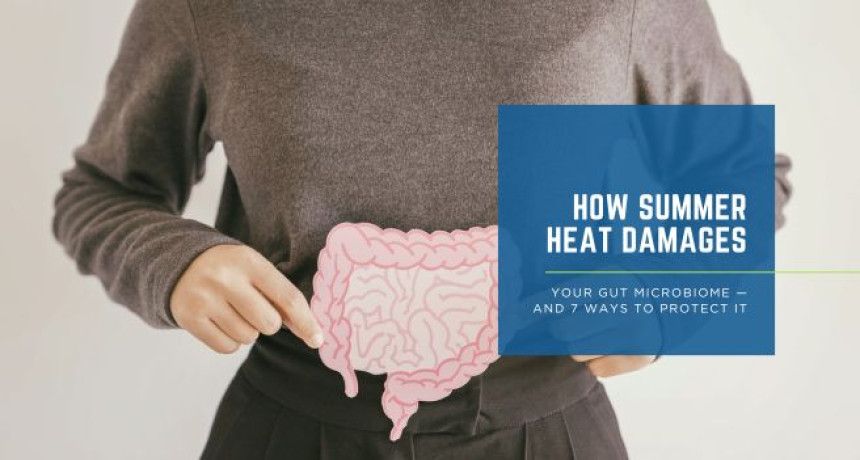
How Summer Heat Damages Your Gut Microbiome — and 7 Ways to Protect It

Most conversations about summer health in India focus on what is visible — dehydration, skin damage, heat exhaustion, mineral loss. These are real and significant. But there is a system being damaged by Indian summer heat that receives almost no attention in mainstream health advice, despite being directly connected to immunity, metabolism, mood, cognitive function, and biological ageing. That system is the gut microbiome. The approximately 38 trillion microorganisms inhabiting the human gastrointestinal tract — collectively comprising over a thousand bacterial species alongside archaea, fungi, and viruses — constitute what is now understood as a metabolic organ of extraordinary complexity and consequence. The gut microbiome synthesises vitamins, regulates immune function, produces neurotransmitter precursors, metabolises medications, modulates inflammatory signalling throughout the body, and communicates bidirectionally with the brain through the gut-brain axis in ways that influence mood, cognition, and stress response (Sender, Fuchs and Milo, 2016). India's summer damages this system through multiple simultaneous mechanisms — and the damage accumulates across the season in ways that persist well beyond the heat itself. At L&B Clinics, gut microbiome health is an integral dimension of our integrative medicine approach — because the evidence increasingly positions dysbiosis, the disruption of healthy microbiome composition, as one of the twelve hallmarks of ageing and a primary driver of the systemic inflammation that accelerates biological age (López-Otín et al., 2023). Understanding how summer heat specifically damages the gut — and what to do about it — is therefore not peripheral to a longevity and wellness programme. It is central to one. Before the protective strategies, the mechanisms deserve careful attention — because understanding why heat damages the gut determines which interventions actually address the problem rather than simply adding probiotics to an environment that cannot support them. The gut microbiome is exquisitely temperature-sensitive. Even modest elevations in core body temperature — well within the range produced by Indian summer heat exposure — shift the competitive dynamics between bacterial species in ways that favour pathogenic and opportunistic organisms over beneficial ones. Research published in Cell Host and Microbe demonstrated that heat stress produced measurable reductions in Lactobacillus and Bifidobacterium species — the primary beneficial bacteria associated with immune regulation, barrier integrity, and anti-inflammatory function — alongside increases in potentially pathogenic Proteobacteria, within days of sustained heat exposure (Karl et al., 2018). This shift in microbial ecology is not simply a compositional curiosity. It has direct functional consequences: reduced short-chain fatty acid production, impaired epithelial barrier maintenance, increased intestinal permeability, and elevated systemic inflammatory signalling. The intestinal mucosal layer — the mucus-rich barrier separating gut bacteria from the underlying epithelium and systemic circulation — is approximately 95 percent water. Dehydration reduces mucus viscosity and thickness, compromising the physical barrier that maintains appropriate separation between the microbiome and the host immune system (Camilleri et al., 2012). When this barrier becomes inadequate — a condition termed increased intestinal permeability, or colloquially "leaky gut" — bacterial products including lipopolysaccharide (LPS) translocate across the epithelium into systemic circulation. LPS is a potent activator of the innate immune system and a primary driver of the chronic low-grade inflammation — inflammaging — that is now recognised as the common pathway through which gut dysbiosis contributes to accelerated biological ageing (Franceschi et al., 2018). In India's summer, where dehydration is continuous and widespread, this mechanism operates at population scale. The persistent mild dehydration of the typical urban Indian professional through April to June is not simply reducing their energy and concentration — it is degrading their intestinal barrier and elevating systemic inflammatory burden every day of the season. During heat stress, the body prioritises blood flow to the skin for thermoregulation — directing circulation peripherally for heat dissipation at the expense of visceral organs including the gut. Research established that splanchnic blood flow drops by up to 40 percent during sustained heat exposure, reducing the oxygen and nutrient delivery to gut epithelial cells and the mucosal immune system (Rao and Summers, 2006). Gut epithelial cells — among the fastest-dividing cells in the body, with a turnover cycle of approximately three to five days — are highly sensitive to this ischaemic stress. Reduced blood flow impairs their renewal capacity, compromises tight junction protein expression that maintains barrier integrity, and creates the hypoxic conditions in which anaerobic pathogenic bacteria thrive relative to the oxygen-tolerant beneficial species. The human gut microbiome is fed primarily by dietary fibre — the non-digestible carbohydrates that reach the colon intact and are fermented by resident bacteria into short-chain fatty acids (SCFAs), particularly butyrate, propionate, and acetate. Butyrate is the primary energy source for colonocytes — the epithelial cells lining the colon — and a potent suppressor of colonic inflammation through its inhibition of NF-κB signalling (Koh et al., 2016). Indian dietary patterns shift significantly in summer. Appetite suppression from heat reduces the intake of fibre-rich traditional foods — dal, sabzi, whole grains — in favour of lighter, lower-fibre options. Cold and processed foods, carbonated drinks, and refrigerated convenience foods increase. Alcohol consumption at summer social gatherings rises. Each of these shifts reduces the substrate available to beneficial bacteria and contributes to the dysbiotic shift that heat stress has already initiated through the mechanisms above. India's summer and monsoon transition seasons are the peak period for foodborne illness — gastroenteritis, typhoid, and traveller's diarrhoea — driven by the accelerated bacterial proliferation in food and water that warm temperatures enable. Each episode of acute gastrointestinal infection produces significant microbiome disruption that, without active rehabilitation, can persist for weeks to months beyond clinical recovery (Jalanka et al., 2015). The post-infection microbiome is characterised by reduced diversity, depleted Lactobacillus and Bifidobacterium populations, and elevated inflammatory bacterial species — precisely the dysbiotic profile associated with increased intestinal permeability, systemic inflammation, and accelerated biological ageing. The common clinical experience of persistent digestive irregularity, fatigue, and immune vulnerability following a summer stomach illness reflects this prolonged microbiome disruption rather than any ongoing infection. The single most important nutritional determinant of microbiome composition is dietary fibre intake — specifically the prebiotic fibres that selectively feed beneficial bacterial species. In the context of summer appetite suppression and dietary simplification, maintaining deliberate fibre intake becomes both more important and more effortful. The most evidence-supported prebiotic fibres for Lactobacillus and Bifidobacterium proliferation include inulin and fructooligosaccharides found in onions, garlic, leeks, and bananas; resistant starch in slightly underripe bananas, cooked and cooled rice, and legumes; and beta-glucans in oats. Research published in Nature confirmed that dietary fibre intake is the strongest single predictor of microbiome diversity — a parameter consistently associated with better immune function, lower inflammatory markers, and slower biological ageing (David et al., 2014). In the Indian summer context, practical prebiotic sources that do not exacerbate heat discomfort include slightly underripe banana consumed with breakfast, garlic incorporated into cooked sabzi, and dal consumed with cooled rice — the latter producing resistant starch through the cooling process. India's traditional food culture is extraordinarily rich in fermented foods — and fermentation's role in microbiome maintenance is one of the areas of gut health research with the most compelling recent evidence. A landmark randomised controlled trial published in Cell by Wastyk et al. (2021) demonstrated that a high-fermented food diet increased microbiome diversity and reduced a panel of inflammatory markers — including IL-6 and IL-12p70 — in human participants over a ten-week period. Microbiome diversity, the same study confirmed, is inversely associated with systemic inflammatory burden and biological ageing markers. Indian fermented foods — dahi (yoghurt) containing live Lactobacillus cultures; chaas (buttermilk) as a potassium-rich probiotic summer drink; idli and dosa batter fermented with naturally occurring lactic acid bacteria; kanji, the traditional fermented vegetable drink of North India; and pickles prepared through genuine lacto-fermentation rather than vinegar acidification — deliver a diversity of beneficial bacterial species directly to the gut ecosystem that commercial probiotic supplements often fail to replicate. Dahi specifically has a strong evidence base in the Indian context. Research published in the Indian Journal of Medical Research confirmed that regular dahi consumption was associated with significantly lower enteric infection rates and faster recovery from gastrointestinal illness — effects mediated through competitive exclusion of pathogenic bacteria and immune modulation (Ganguly et al., 2011). Plain water, as previous L&B Clinics blogs have established, does not replace what Indian summer sweat removes. But in the context of gut microbiome protection, the mineral dimension of hydration has a specific additional significance beyond electrolyte balance. Magnesium — depleted rapidly through summer sweating — is required for the enzymatic production of mucin, the primary protein component of intestinal mucus. Without adequate magnesium, mucus production slows and the mucosal barrier thins — directly enabling the bacterial translocation and increased intestinal permeability that drives systemic inflammation. Zinc is required for the tight junction protein expression that maintains epithelial barrier integrity between cells (Skalny et al., 2021). Coconut water provides a natural potassium-magnesium base that meaningfully supports both hydration and mucosal barrier function. Chaas with a pinch of rock salt delivers sodium, probiotics, and the fluid volume the gut needs to maintain mucus thickness. Jeera water — cumin steeped in warm water — has traditional credibility and emerging evidence for carminative and gut motility-supporting effects. Where mineral depletion is significant and dietary replenishment is insufficient — as is frequently the case in Delhi's peak summer months — IV mineral therapy at L&B Clinics provides the comprehensive, rapid mineral restoration that mucosal barrier maintenance requires. The inflammatory cascade initiated by summer heat stress — LPS translocation, elevated IL-6 and TNF-alpha, NF-κB activation — requires active counter-regulation through dietary anti-inflammatory inputs that most Indian diets provide in theory but insufficient quantity in practice. Curcumin — the active polyphenol in turmeric — has a substantial evidence base for NF-κB inhibition, reduction of intestinal permeability markers, and direct modulation of gut microbiome composition toward anti-inflammatory species (Aggarwal and Harikumar, 2009). Its bioavailability from food sources is limited by rapid hepatic metabolism — critically enhanced by co-consumption with piperine from black pepper, which inhibits the glucuronidation pathway responsible for curcumin clearance and increases plasma bioavailability by up to 2000 percent (Shoba et al., 1998). Omega-3 fatty acids — from flaxseed, walnuts, and fatty fish where dietary preference allows — reduce the production of pro-inflammatory eicosanoids and directly support the resolution phase of gut inflammation through their conversion to specialised pro-resolving mediators (SPMs) including resolvins and protectins. 5. Protect the Gut-Brain Axis — Manage Summer Cortisol Actively The gut-brain axis is a bidirectional communication network linking the enteric nervous system of the gut with the central nervous system through vagal, hormonal, and immunological pathways. Cortisol — produced in elevated quantities under the combined stress of professional demands, heat, and sleep disruption of the Indian summer — directly alters gut microbiome composition through glucocorticoid receptors expressed on gut epithelial cells and through its suppression of secretory IgA, the primary immunoglobulin of the gut mucosal immune system (Konturek, Brzozowski and Konturek, 2011). The Delhi professional experiencing peak summer cortisol burden is therefore experiencing simultaneous gut microbiome disruption through both direct physiological heat mechanisms and the neuroendocrine consequences of stress — a compound effect that neither intervention alone fully addresses. Practical cortisol management strategies with direct gut microbiome implications include deliberate daily parasympathetic activation — ten minutes of slow diaphragmatic breathing has demonstrated measurable secretory IgA elevation in clinical studies; adequate sleep architecture protection, which regulates the circadian cortisol gradient essential for gut immune function; and the magnesium IV therapy used at L&B Clinics, which modulates NMDA receptor activity and reduces the hyperarousal state that drives cortisol overproduction. Every bout of summer gastroenteritis, typhoid, or viral gut illness leaves behind a microbiome that has been significantly disrupted — characterised by reduced diversity, depleted beneficial species, and elevated pathogenic or opportunistic bacteria. Without active rehabilitation, this dysbiotic state persists for weeks to months, producing the ongoing fatigue, digestive irregularity, and immune vulnerability that patients frequently experience long after the acute illness has resolved (Jalanka et al., 2015). Active microbiome rehabilitation following gut illness requires three sequential priorities: rehydration and mucosal barrier restoration — which IV therapy at L&B Clinics addresses rapidly and completely; reintroduction of prebiotic substrate to feed recovering beneficial bacteria before probiotic supplementation begins; and structured probiotic supplementation with evidence-supported strains including Lactobacillus rhamnosus GG, Lactobacillus acidophilus, and Bifidobacterium longum, which have the strongest clinical evidence bases for post-dysbiosis microbiome restoration. The sequencing matters. Probiotic supplementation without adequate rehydration and mucosal barrier restoration delivers beneficial bacteria into a compromised environment where their colonisation and function are impaired. IV rehydration and mineral restoration first — then dietary prebiotic support — then structured probiotic supplementation represents the most clinically rational post-illness rehabilitation sequence. The connection between IV micronutrient therapy and gut microbiome protection is less immediately obvious than probiotic supplementation or dietary fibre — but mechanistically it may be the most important intervention for sustained gut health through the Indian summer. The intestinal epithelial barrier — the single-cell-thick layer separating the gut lumen from systemic circulation — has a turnover cycle of three to five days, meaning it is continuously rebuilt from available nutritional substrates. The tight junction proteins that maintain barrier integrity between epithelial cells — claudins, occludins, and ZO-1 — require zinc for expression regulation. The mucus layer requires magnesium for mucin synthesis. Vitamin C is required for the collagen matrix of the submucosa. B-complex vitamins are required for the rapid DNA replication of epithelial cell renewal (Skalny et al., 2021). In Delhi's summer, where each of these nutrients is being continuously depleted by heat, sweat, stress, and dietary gaps, the intestinal barrier is being continuously undermaintained. Monthly IV micronutrient therapy at L&B Clinics provides the comprehensive, bioavailable nutritional substrate that gut barrier maintenance requires — addressing the depletion that dietary correction alone cannot adequately counteract in the physiological environment of Indian summer. Gut microbiome health is not a digestive medicine topic that happens to intersect with wellness. It is a longevity medicine topic that belongs at the centre of any serious anti-ageing programme. Dysbiosis — disrupted gut microbiome composition — is now listed among the twelve hallmarks of ageing by López-Otín et al. (2023) in their updated framework. It drives systemic inflammaging through LPS translocation and reduced SCFA production. It impairs the immune surveillance that protects against cancer and infection. It compromises the gut-brain axis in ways that affect neurological ageing. It reduces the synthesis of urolithins and other longevity-relevant metabolites produced exclusively by specific gut bacterial species from dietary polyphenols. Protecting the gut microbiome through Indian summer is therefore not simply about avoiding digestive discomfort. It is about maintaining one of the twelve biological systems whose integrity determines the rate at which you age — and doing so in the season when that system faces its greatest annual challenge. Aggarwal, B.B. and Harikumar, K.B. (2009) 'Potential therapeutic effects of curcumin, the anti-inflammatory agent, against neurodegenerative, cardiovascular, pulmonary, metabolic, autoimmune and neoplastic diseases', International Journal of Biochemistry and Cell Biology, 41(1), pp. 40–59. https://doi.org/10.1016/j.biocel.2008.06.010 Camilleri, M., Lasch, K. and Zhou, W. (2012) 'Irritable bowel syndrome: methods, mechanisms, and pathophysiology — the confluence of increased permeability, inflammation, and pain in irritable bowel syndrome', American Journal of Physiology — Gastrointestinal and Liver Physiology, 303(7), pp. G775–G785. https://doi.org/10.1152/ajpgi.00155.2012 David, L.A., Maurice, C.F., Carmody, R.N., Gootenberg, D.B. and Turnbaugh, P.J. (2014) 'Diet rapidly and reproducibly alters the human gut microbiome', Nature, 505(7484), pp. 559–563. https://doi.org/10.1038/nature12820 Franceschi, C., Garagnani, P., Parini, P., Giuliani, C. and Santoro, A. (2018) 'Inflammaging: a new immune-metabolic viewpoint for age-related diseases', Nature Reviews Endocrinology, 14(10), pp. 576–590. https://doi.org/10.1038/s41574-018-0059-4 Ganguly, N.K., Bhatt, D.L., Gordon, J., Reidpath, D. and Zografos, T. (2011) 'Probiotics in the management of gastrointestinal disorders', Indian Journal of Medical Research, 134(4), pp. 423–428. Jalanka, J., Salonen, A., Salojärvi, J., Ritari, J. and de Vos, W.M. (2015) 'Effects of bowel cleansing on the intestinal microbiota', Gut, 64(10), pp. 1562–1568. https://doi.org/10.1136/gutjnl-2014-307240 Karl, J.P., Hatch, A.M., Arcidiacono, S.M., Pearce, S.C. and Montain, S.J. (2018) 'Effects of psychological, environmental and physical stressors on the gut microbiota', Frontiers in Microbiology, 9, p. 2013. https://doi.org/10.3389/fmicb.2018.02013 Koh, A., De Vadder, F., Kovatcheva-Datchary, P. and Bäckhed, F. (2016) 'From dietary fiber to host physiology: short-chain fatty acids as key bacterial metabolites', Cell, 165(6), pp. 1332–1345. https://doi.org/10.1016/j.cell.2016.05.041 Konturek, P.C., Brzozowski, T. and Konturek, S.J. (2011) 'Gut clock: implication of circadian rhythms in the gastrointestinal tract', Journal of Physiology and Pharmacology, 62(2), pp. 139–150. López-Otín, C., Blasco, M.A., Partridge, L., Serrano, M. and Kroemer, G. (2023) 'Hallmarks of aging: an expanding universe', Cell, 186(2), pp. 243–278. https://doi.org/10.1016/j.cell.2022.11.001 Rao, S.S. and Summers, R.W. (2006) 'Managing irritable bowel syndrome', American Journal of Gastroenterology, 101(12), pp. 2590–2599. Rosanoff, A., Weaver, C.M. and Rude, R.K. (2012) 'Suboptimal magnesium status in the United States: are the health consequences underestimated?', Nutrition Reviews, 70(3), pp. 153–164. https://doi.org/10.1111/j.1753-4887.2011.00465.x Sender, R., Fuchs, S. and Milo, R. (2016) 'Revised estimates for the number of human and bacteria cells in the body', PLOS Biology, 14(8), p. e1002533. https://doi.org/10.1371/journal.pbio.1002533 Shoba, G., Joy, D., Joseph, T., Majeed, M. and Rajendran, R. (1998) 'Influence of piperine on the pharmacokinetics of curcumin in animals and human volunteers', Planta Medica, 64(4), pp. 353–356. https://doi.org/10.1055/s-2006-957450 Skalny, A.V., Rink, L., Ajsuvakova, O.P., Aschner, M. and Tinkov, A.A. (2021) 'Zinc and respiratory tract infections: perspectives for COVID-19', International Journal of Molecular Medicine, 46(1), pp. 17–26. https://doi.org/10.3892/ijmm.2020.4575 Wastyk, H.C., Fragiadakis, G.K., Perelman, D., Dahl, W.J. and Gardner, C.D. (2021) 'Gut-microbiota-targeted diets modulate human immune status', Cell, 184(16), pp. 4137–4153. https://doi.org/10.1016/j.cell.2021.06.019How Summer Heat Actually Damages the Gut Microbiome
Heat Stress Directly Alters Microbial Composition
Dehydration Degrades the Mucosal Barrier
Reduced Splanchnic Blood Flow Starves the Gut Ecosystem
Dietary Disruption Through Summer Changes Microbial Food Supply
Foodborne Pathogen Exposure Peaks in Summer Heat
7 Evidence-Backed Ways to Protect Your Gut Microbiome Through Indian Summer
1. Prioritise Prebiotic Fibre — Feed the Bacteria You Want to Keep
2. Use Fermented Foods as Daily Probiotic Delivery — India's Own Tradition
3. Hydrate With Mineral-Rich Fluids — Not Just Water
4. Reduce Heat-Driven Gut Inflammation With Curcumin and Omega-3s
6. Use a Post-Illness Microbiome Rehabilitation Protocol — Not Just Antibiotics and Rest
7. Schedule Monthly IV Micronutrient Therapy Through Summer — Gut Barrier Maintenance
The Gut-Longevity Connection — Why This Matters Beyond Digestion
References