.png)
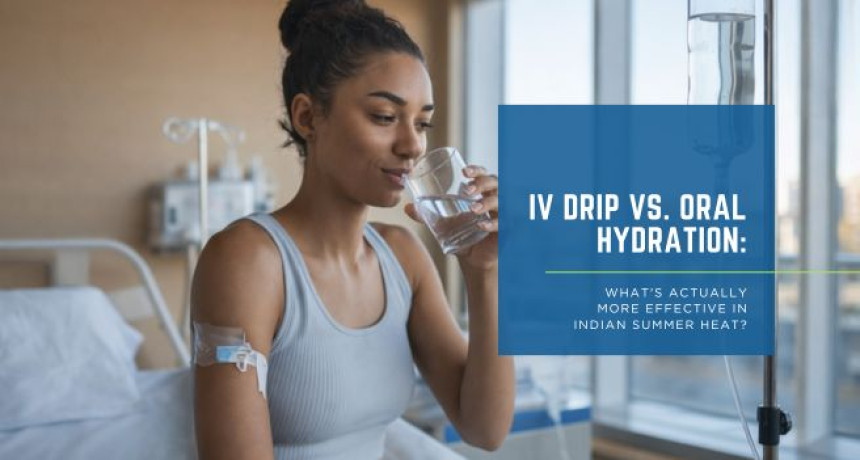
IV Drip vs. Oral Hydration: What's Actually More Effective in Indian Summer Heat?

Every summer in India, millions of people battle dangerous dehydration. From Delhi's 45°C afternoons to Mumbai's suffocating humidity, staying hydrated is not a wellness trend — it is a medical necessity. But here is the question more health-conscious Indians are asking: Is drinking water actually enough, or does IV drip therapy offer something your ORS packet simply cannot? At L&B Clinics, we see the effects of severe dehydration every summer. In this blog, we break down the science, the speed, and the smart choice between IV drip therapy and oral hydration — so you can make an informed, evidence-backed decision for your health. Why Indian Summer Heat Is a Unique Hydration Challenge India's summer is physiologically demanding in ways that most people underestimate. The Indian Meteorological Department regularly records heatwave conditions exceeding 44°C across North India between April and June (IMD, 2023). Combined with high humidity in coastal cities and scorching dry winds inland, the body loses fluids and electrolytes at a rapid and dangerous rate. Research indicates that in extreme heat, the human body can lose between 1 to 1.5 litres of sweat per hour during physical activity, and up to 500–800 ml per hour even at rest in a non-airconditioned environment (Sawka et al., 2007). Critically, this is not just water loss. Sweat carries sodium, potassium, magnesium, and chloride — electrolytes essential for nerve function, muscle contraction, and cardiovascular stability. Persistent fatigue and low energy throughout the day Dark-coloured urine Dizziness, lightheadedness, or brain fog Muscle cramps, particularly in the legs Rapid heartbeat and dry mouth Confusion or inability to concentrate These symptoms are frequently dismissed as general "summer tiredness" — a dangerous oversight. Oral Hydration — What It Does Well and Where It Falls Short Oral hydration means replacing lost fluids through water, coconut water, electrolyte drinks, or ORS (Oral Rehydration Solution). The WHO-recommended ORS formula — glucose, sodium chloride, potassium chloride, and trisodium citrate — has saved millions of lives globally and remains the gold standard for managing mild-to-moderate dehydration (WHO, 2006). For everyday prevention and mild fluid loss, oral hydration is accessible, affordable, and effective. It requires no medical supervision and works naturally with the body's gastrointestinal absorption system. Slow absorption: Fluids taken orally take 30 to 60 minutes to be absorbed through the gut lining into the bloodstream (Gisolfi and Duchman, 1992) Reduced gut efficiency under heat stress: Research from the American Journal of Physiology shows that gut perfusion — blood flow to the intestines — drops by up to 40% during heat stress, making oral absorption even less efficient precisely when it is needed most (Rao and Summers, 2006) Vomiting and nausea barriers: Many cases of heat exhaustion involve active vomiting, making oral fluid retention impossible Incomplete micronutrient replacement: Drinking water and even standard ORS cannot replenish magnesium, B vitamins, or vitamin C lost during prolonged heat exposure What Is IV Drip Therapy and How Does It Work? Intravenous (IV) drip therapy delivers a medically formulated solution — containing fluids, electrolytes, vitamins, and antioxidants — directly into the bloodstream via a sterile IV line. At L&B Clinics, all IV therapy is administered by qualified medical professionals, with each formulation customised to the patient's clinical needs. A standard IV hydration drip typically contains: Normal Saline or Ringer's Lactate — isotonic fluid to rapidly restore blood volume Electrolytes — sodium, potassium, calcium, magnesium Vitamin C — antioxidant and immune support B-Complex Vitamins — energy metabolism and neurological function Dextrose — immediate cellular energy supply Anti-nausea medication — when clinically required This is the defining clinical difference. IV therapy delivers nutrients directly into the bloodstream, bypassing the gastrointestinal tract entirely. Bioavailability: 100% — every molecule enters circulation immediately Onset of relief: Most patients experience measurable relief from fatigue, headache, and dizziness within 15 to 30 minutes Session duration: Typically 45 minutes to 1 hour at L&B Clinics A systematic review published in Paediatric Emergency Care confirmed that IV fluid resuscitation restores plasma volume significantly faster than oral rehydration, particularly in moderate-to-severe dehydration cases (van Wijnen et al., 2012). IV Drip vs. Oral Hydration — Head-to-Head Comparison When Should You Choose IV Drip Therapy Over Oral Hydration? Heatstroke is a life-threatening emergency where core body temperature exceeds 40°C, placing the brain, kidneys, and cardiovascular system at immediate risk. In these situations, oral hydration is dangerously inadequate. IV fluids are the first-line treatment in all established emergency medicine protocols (Bouchama and Knochel, 2002). India's summer brings a sharp spike in waterborne illnesses — typhoid, gastroenteritis, and viral fever. After prolonged vomiting and diarrhoea, the gut lining is compromised and cannot absorb fluids efficiently. IV therapy restores fluid and electrolyte balance rapidly while the digestive system heals. Marathon runners, outdoor workers, and recreational athletes in Delhi and other metro cities are increasingly using IV hydration after intense exertion. The rapid replenishment of electrolytes, glycogen-supporting glucose, and B vitamins accelerates muscle recovery significantly faster than sports drinks alone (Casa et al., 2000). Many working professionals experience persistent fatigue throughout summer — often dismissed as heat-related laziness. This is frequently sub-clinical dehydration compounded by poor sleep, stress, and inadequate nutrition. A single IV drip session can restore energy levels, cognitive clarity, and mood within hours. Long-haul flights and road travel through summer India are significantly dehydrating. IV therapy before or after travel maintains optimal hydration and immune function when the body is under additional physiological stress. Is IV Drip Therapy Safe? Key Facts for Indian Patients Safety is a legitimate and important concern. IV therapy carries minimal risk when administered by qualified professionals in a proper clinical setting, but it is not appropriate for everyone without a prior medical assessment. Patients requiring clearance before IV therapy include: Those with congestive heart failure or chronic kidney disease (fluid overload risk) Pregnant women without prior medical consultation Patients with active bloodstream infections What makes L&B Clinics safe: Licensed medical professionals administer every session A pre-therapy health assessment is completed for all patients Sterile, single-use IV equipment is used without exception All formulations comply with Indian Pharmacopoeia standards Patients are monitored continuously throughout the session Practical Summer Hydration Guide from L&B Clinics Drink a minimum of 3 to 4 litres of water daily in Indian summer conditions, more with physical activity Add rock salt and lemon to water for natural electrolyte support Include coconut water, buttermilk (chaas), and fresh fruit juices in your daily diet Limit tea, coffee, and alcohol — all are diuretics that increase fluid loss Use WHO-ORS during early stages of diarrhoea, fever, or mild dehydration Read More: IV Therapy vs. Oral Supplements: Absorption, Data & When Each Works Recovering from a viral illness, gastroenteritis, or typhoid Persistent fatigue despite adequate sleep and water intake Prolonged exposure to heat through outdoor work, sports, or travel Unable to retain food or water due to nausea or vomiting Preparing for or recovering from a high-demand event, competition, or journey The Verdict For daily prevention and mild dehydration: Oral hydration with water, ORS, and electrolyte-rich foods is the accessible, affordable, and effective first-line approach. For moderate-to-severe dehydration, illness recovery, athletic performance, and rapid restoration of energy: IV drip therapy at L&B Clinics is measurably faster, more precise, and more complete than anything you can drink. In India's extreme summer conditions — where heatstroke is common, waterborne illnesses peak seasonally, and millions of professionals push through dangerous heat-related fatigue — IV therapy is not a luxury. It is a clinically sound, evidence-backed tool for faster, fuller recovery. If you are unsure which option is right for your situation, the medical team at L&B Clinics is available for consultation. We assess your individual needs and recommend the most appropriate hydration strategy for your health. References Bouchama, A. and Knochel, J.P. (2002) 'Heat stroke', New England Journal of Medicine, 346(25), pp. 1978–1988. https://doi.org/10.1056/NEJMra011089 Casa, D.J., Armstrong, L.E., Hillman, S.K., Montain, S.J., Reiff, R.V., Rich, B.S., Roberts, W.O. and Stone, J.A. (2000) 'National Athletic Trainers' Association position statement: fluid replacement for athletes', Journal of Athletic Training, 35(2), pp. 212–224. Cheuvront, S.N. and Kenefick, R.W. (2014) 'Dehydration: physiology, assessment, and performance effects', Comprehensive Physiology, 4(1), pp. 257–285. https://doi.org/10.1002/cphy.c130017 Gisolfi, C.V. and Duchman, S.M. (1992) 'Guidelines for optimal replacement beverages for different athletic events', Medicine and Science in Sports and Exercise, 24(6), pp. 679–687. Indian Meteorological Department (2023) Heat wave report — North India summer 2023. New Delhi: Ministry of Earth Sciences, Government of India. Maughan, R.J. and Shirreffs, S.M. (2010) 'Development of hydration strategies to optimise performance for athletes in high-heat environments', Scandinavian Journal of Medicine and Science in Sports, 20(S3), pp. 59–69. https://doi.org/10.1111/j.1600-0838.2010.01191.x Rao, S.S. and Summers, R.W. (2006) 'Managing irritable bowel syndrome', American Journal of Gastroenterology, 101(12), pp. 2590–2599. Sawka, M.N., Burke, L.M., Eichner, E.R., Maughan, R.J., Montain, S.J. and Stachenfeld, N.S. (2007) 'American College of Sports Medicine position stand: exercise and fluid replacement', Medicine and Science in Sports and Exercise, 39(2), pp. 377–390. https://doi.org/10.1249/mss.0b013e31802ca597 van Wijnen, H.J., Schimmelpenninck, L. and van der Wal, M.F. (2012) 'Intravenous versus oral rehydration in mild dehydration: a systematic review', Paediatric Emergency Care, 28(10), pp. 1005–1010. World Health Organization (2006) WHO, UNICEF joint statement: clinical management of acute diarrhoea. Geneva: WHO Press.Signs of Dehydration Indians Commonly Ignore
However, Oral Hydration Has Critical Limitations in Summer Emergencies
The Speed Advantage — Why IV Therapy Works Faster
1. Heat Exhaustion and Heatstroke
2. Post-Illness Recovery
3. Athletic and Physical Recovery
4. Chronic Summer Fatigue in Urban Professionals
5. Pre- and Post-Travel Recovery
Daily Oral Hydration Best Practices
When to Book an IV Drip Session at L&B Clinics